Spending a week in Havana with all the that there is to appreciate and explore is easy to do. Since I was only staying for a few days however I needed to make them count. With my driver and translator with me I set out to the Pinar del Rio region of Cuba to visit local tobacco farms with my main stop being the renowned Robaina Tobacco Farm. Alejandro Robaina was a famed tobacco grower who’s tobacco was so prized that in 1997 he was awarded a brand named in his honor called “Vegas Robaina”. Sadly Alejandro Robaina passed away in 2009 although his grandson Hiroshi continues with his growing tradition and legacy. If you’ve never smoked a Vegas Robaina cigar you should as they can be wonderful however do not think you are smoking a cigar directly from the Robaina Farm. This NOT a single estate cigar. It is merely a blend from many farms created to have a distinct flavor profile for the brand “Vegas Robaina”. This was another reason I was really looking forward to visiting and possibly having the chance to smoke a Finca or “Farm” cigar from the actual Estate.
As you drive up the dirt road to the farm you see a large overhanging sign with the words “Alajandro Robaina 1845” clearly noting the farms history.
Upon entering we were greeted by a guide who explained the history of the farm and Alejandro Robaina’s legacy. As we walked we were shown the acres of tobacco growing in the field as well as a special plot of seeds beginning to grow. We were told this plot was for something they were still unsure of how it was going to be used or quite possibly they didn’t want to tell us.
After seeing the tobacco as it was growing our next stop was the curing barn where tobacco is dried and cured after it is harvested. The tobacco is hung from the barn as seen below.
If you have never visited a tobacco farm before seeing the process firsthand gives you an appreciation of the time and care involved in creating this craft product. Our guide highlighted pictures of the various stages of the tobacco process and the journey it takes from seed to cigar.
As part of the tour a cigar roller was in the barn rolling a fresh cigar. I was fortunate enough to be the one who was gifted the smoke as it came off the table. As I stated earlier the brand Vegas Robaina is a blend from various tobacco farms used to create the flavor characteristic of the name brand. The cigar I was given was probably the truest expression of a cigar from Alejandro’s farm and his tobacco.
Wrapped in newspaper to aid in drying the fresh tobacco before smoking, a true Robaina cigar:
Next we were taken to the dining area where events are held and an homage to Alejandro is purposefully represented.
The last stop was the famous rocking chair where Alejandro Robaina was said to sit and smoke. I can only imagine the decades of contemplation and reverence that was put into each harvest day after day year after year. As I headed off in the early afternoon to my next adventure I left feeling a newfound appreciation for the cigar making process as well as how respected Alejandro was in his homeland and the world.
Ah, the mystical Island of Cuba. For the U.S. it’s the forbidden country that secured the embargo on September 7th 1962 when John Fitzgerald Kennedy re-instated the Trading With The Enemy act of 1917. Since then U.S. citizens have only be able to travel to Cuba for very strict diplomatic or humanitarian reasons and return with no goods from the country… until now. Last year President Obama repealed the travel ban on Cuba creating more broad allowances for U.S. citizens to travel there. Better still the former president lifted restrictions on bringing back goods from Cuba to the United States. For beloved cigar smokers this was fantastic news. Having traveled around the world smoking Cuban cigars, finally being able to visit the country and farms where the famed tobacco is grown is a cigar aficionados dream come true. In this first report I will touch upon the ease of travel to Cuba and the state of cigars I found in Havana. Also included is a list of the best places to purchase cigars and where I found some older vintages lying around.
Travel: Traveling to Cuba was as easy as booking a flight with Delta straight to Havana. You can pay with your credit card through Delta however you can’t use any U.S. credit cards when you are in Cuba. Cuba is strictly cash for Americans and you can exchange U.S. dollars for Cuba’s CUC’s at the airport or any bank in Havana. Be aware that U.S. dollar incurs a 10% transfer fee when exchanging to CUC’s. You will also need a travel visa along with one of the twelve reasons you are traveling to Cuba. Most visitors will fall under the “People To People Educational Act” so long as you visit a cigar factory, farm, rum distillery or art museum. Touring a cigar farm, a rum distillery or viewing art is a pleasure in Cuba and the culture is what you are looking for. You will need to purchase a travel visa as well as book a hotel in advance. I suggest using a third party travel site which takes care of all those things for you. You can pay in advance which leaves you only having to bring money to spend on your trip. I recommend the Educational Adventures Company as they were excellent in making those arrangements as well as getting you into any factories or farm tours. They will also set you up with a translator and driver if you desire. The prices were very reasonable and their service fantastic. http://www.theeducationaladventurescompany.com/ If you wish to book on your own you need to contact the U.S. Office of Treasury and request a visa for purchase. In booking a hotel you would need to book online.
Havana:
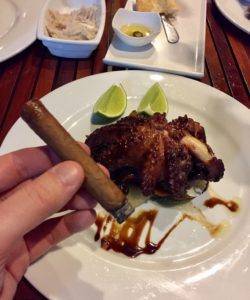
Arriving in Havana I grabbed my taxi and headed to the Casa Particulares I was staying at. The first order of business was to relax on their rooftop have a mojito and view the city as a whole during the early afternoon. Havana is as you see it in pictures; a run down third world country with half built structures, renovated 50’s American classic cars and beautiful French/Spanish architecture from the days when those countries ruled the island. The people are friendly and eager to please in what is now a boom in American tourism. In speaking with the Casa owner he said since Obama repealed travel restrictions they saw a rise in visitors from the U.S. to a million last year and near two million this year. The fear the Cubans have is keeping up with the demand. Before hitting the Casa Del Habanos which are the authorized Cuban cigar dealers and the ONLY place you should be buying cigars, I hit a Paladar which is a restaurant run by the locals and not the government. Stay away from any government run establishments as the food and service are mediocre at best. I had some of the best octopus of my life at a local Paladar and was handed a cigar to smoke with my meal. This was a local farm cigar and the flavors of earth and fresh tobacco where present. It was more of a one dimensional smoke but the earthiness hit the spot with the perfectly cooked slightly smoked octopus.
Smoked octopus with semi sweet glaze:
Cigars:
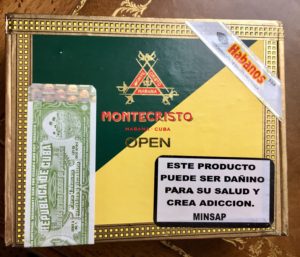
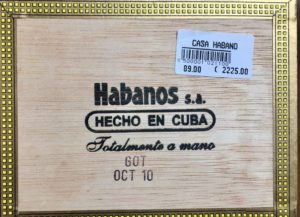
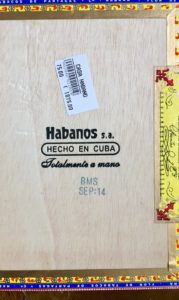
With some hearty fare and a cigar to match it was time to hit the La Casa del Habano. As I said before these are the only official stores that carry authentic Cuban brands. In Havana you will be solicited to buy Cuban cigars on the street for an even cheaper price than the stores. Do not do this unless you want to smoke fakes. If someone tells you their brother’s cousins friend works at the Partagas Factory and gets cigars from there they are lying. At best you’ll get a cigar blended with fresh farm tobacco which will taste nothing like the brands you know. At worst it can be short filler or scraps from a rolling table floor. Don’t waste your money or time on these “faux” sticks. Go to the the La Casa’s and spend your money on an authentic selection of smokes as these will be the best prices you’ve seen as a consumer anywhere in the world. My advice is to flip over boxes and dig deep into their inventory. You may find some boxes with several years of age on them and it is worth the hunt. The proprietors do not mind you rummaging through their stock and will often help you. I was fortunate enough to find boxes with as much as seven years of age on them.
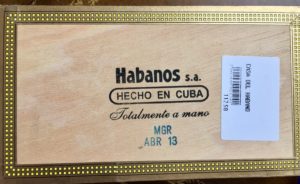
A box of Montecristo Open Juniors from ’10
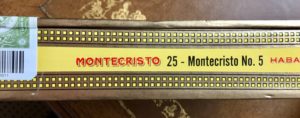
Montecristo #5’s from ’13
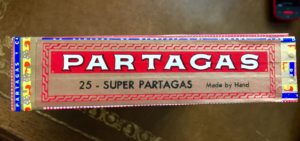
Partgas Super Partagas from ’14
They were fully stocked with most brands from 2016 although there were no Cohiba Behikes or Esplendidos to be found at the places I looked. I stayed away from most 2016 vintages as the past crops in Cuba haven’t been great. I did pick up some boxes of ’16 Trinidad Reyes and current Vegueros Tapados which smoked well despite being young and will most certainty benefit from age. I feel the 2016 vintages are hit or miss from what I’ve smoked so be cautious or pick up single sticks to sample yourself. Most La Casa del Habanos carry single sticks although the selections vary. Below is a list of three La Casa del Habanos you should definitely visit.
La Casa del Habano
5th and 16 Av. 5 y Calle 16, Miramar
This is where I found the oldest vintages of Cuban cigars and the staff were most helpful.
2. La Casa del Habano, Club Habana
Av. 5, entre 188 y 192, Miramar, Playa
The place to enjoy a custom rolled “Monsdale” cigar which was created by the late Enrique Mons. It’s a thicker lonsdale with a pigtail cap. Flavors of caramel, butterscotch and toast in this unique blend.
3. La Casa del Habano, Hotel Habana Libre
Calle L entre 23 y 25, Vedado
The largest selection of boxes of cigars in all sizes. If you enjoy the hunt this is the spot for you.
End of Day One:
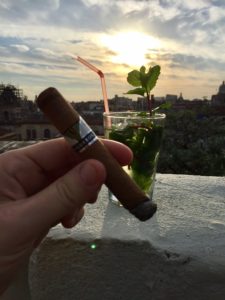
Loaded with cigars and satiated from delicious Cuban fare it was time to watch the sunset with a mojito and cigar reflecting on the first day in Havana. In Part Two I travel to the tobacco fields and the famed Robaina Farm. Stay Tuned!
Cigar smoking is an activity born of hundreds of years of practice and tradition. And like any other traditional pastime, smoking etiquette developed as ground rules to make enjoying cigars more comfortable for everyone.
Some traditions, like dipping your cigar in cognac, have become irrelevant. Many old practices remain important. But times have also changed, making new smoking etiquettes necessary. Today, the smoking room is intruded on by more than just the occasional rude patron. We are now intruded upon by wall-mounted televisions, tablets, and smartphones. Social media has turned cigar bragging–once constrained to the lounge or private conversation–into a non-stop sport.
For many a smoker, it is increasingly common to show up at a cigar lounge, sit down next to fellow cigar smokers, and spend the next hour in silence, checking email, posting cigar pictures to Instagram, or listening to music. All of this has served to turn many cigar lounge experiences–always understood to be essentially social in nature–into solitary moments in the midst of our fellow smokers.
Obviously, the answer isn’t to ban all technology. But bearing in mind that cigar smoking has always been a social activity, here are three new etiquettes that will keep the heart of the activity intact.
1. Keep your smartphone, iPad, or computer put away for the first ten minutes after you light up.
The first few minutes at a cigar lounge are the most pivotal to creating a social experience. Instead of checking your Facebook, greet each person in your immediate area, introducing yourself and shaking hands. You’ll find that seven times out of ten, your conversation will continue or start up again later during your visit.
2. If no one is watching the television – turn it off
Our world is full of distractions pulling us away from relating to other people in the real world. If the television is on and no one is watching, what purpose does it serve besides shielding us from having to talk to those around us? Once the TV is off, the silence will create both a more relaxing environment (which is what cigars are all about) and naturally lead patrons into conversation with each other.
3. Don’t ask about work
We are more connected to our work than ever before. In the last hundred years, our market economy has focused our attention on work and encouraged us to judge ourselves and others by what we do, or worse, how much we make. And now with smartphones, leaving the office doesn’t disconnect us from our work the way it used to.
When talking to a new friend at a lounge, remember that smoking is a leisure activity. The last thing most people want to talk about after work is work. Instead, talk about cigars, family, or the book you’re reading. Even politics is better than talking about work, because at least conversations about politics can, in the best circumstances, make us a friend and encourage us and help us be better citizens. Of course, not everyone wants to spend their time at a lounge talking to others. The important thing is not to ignore others completely.
If you find yourself forgetting rules of etiquette like these, just remember that they basically boil down to a common-sense question: “is what I am doing making the room more, or less, comfortable for others to be in?”
Do you have a cigar etiquette that you think belongs on this list? Or a smoking lounge pet-peeve that you find being played out over and over again? Drop it in the comments section!
A while back I was fortunate enough to score a bottle of Dave Phinney’s “Slaughterhouse” Whiskey. Dave Phinney as you may or may not know is the famed vintner who created “The Prisoner” an Über California wine blend. He then sold the company and now makes acclaimed wines from virtually all the major wine producing countries in the world under his Orin Swift label. Last year he decided to turn his taste for wine into sourced whiskeys. Straight Edge was Dave’s first leap into the whiskey world and his skill in crafting wine doesn’t miss a beat when putting together these whiskeys. Straight Edge is hard to come by and I was lucky to grab a bottle for this review.
Straight Edge much like all of Phinney’s creations catches the eye with creative labeling. Straight Edge as the name implies sports an old style straight edge razor. The red background in the lettering matches the color of the whiskey itself. In the bottle the whiskey has an attractive almost sherry color to it. Straight Edge is a blend of 5, 7 and 8 year old Bourbon from Kentucky and Tennessee. It’s finished at Phinney’s facility in Napa Valley using Mercury Head Cabernet Sauvignon barrels. Mercury Head is Orin Swift’s high end expensive Cabernet. I have a bottle of the ’01 Mercury Head and you can see in the picture below the Whiskey and the wine it was barrel finished in.
Here is my review:
Spirit details: Proof 84
Price: $50
Origin: USA
Description: Sherry color in bottle, straight razor on label.
Nose: The nose screams vanilla and wood.
Palate: Upfront lots of vanilla, butterscotch and toasty oak. Midway spice with orange and honey that coats the mouth.
Finish: Real toasty on the finish with vanilla, caramel and a wonderful touch of rye that rounds out the profile.
Conclusion: An extremely well balanced whiskey. While I don’t feel the body was as “weighty” as the Slaughterhouse this whiskey was more nuanced in it’s primary flavors. I attribute this to the aging in Cabernet barrels rather than Bordeaux barrels with Slaughterhouse. Orin Swift Cellars has diversified their profile with both American Whiskeys. Straight Edge delivers sharp flavors of vanilla, oak and spice which is what a quality American Whiskey is all about. If you can find a bottle I would grab it as I wish I had more myself. Below is a link to my review of Slaughterhouse if you’d like to compared the two. Enjoy!
Last month I had the pleasure of taking a day trip to Nassau Bahamas. My one and only plan was to visit the Graycliff Hotel to learn about their cigar making process, techniques and the quality that’s synonymous with the Graycliff brand. Graycliff Hotel was purchased by the Garzaroli family in 1973 and is the premier five star hotel and restaurant on the island as well as housing the largest wine cellar in the Caribbean. The historic mansion and its property boasts a welcoming reception area, opening air dining and Himalayan salt pool, all of which cater to the cigar enthusiast.
Upon entering the hotel you can smell the sweet aroma of a cigar in the lounge. With antique leather chairs, showcases of spirits, paintings and a piano you quickly envision a sense of calm and quiet reflection that guests enjoy puffing away on any given day. Within a few minutes I was greeted by a lovely woman who guided us to the Graycliff Cigar Factory. I could have easily wiled away the afternoon enjoying cigars and spirits right there however I needed to visit the factory where they make the cigars I’ve enjoyed for the past sixteen years.
As I made my way through the old stone walkway palm trees adorned the property along with statues and an elegant pool that truly gave you a sense of the sophisticated history of the hotel. Just before I approached the factory I was taken back by the largest Cigar Divan I have ever seen. The Divan had a large ceiling with fans, lounge chairs, couches, wrought iron tables and a free standing humidor. This is the perfect respite to grab a cigar from the factory and sit with a smoke enjoying the scenery. I’m sure it was no coincidence that the divan is right by the entrance to the cigar factory.
Cigar Divan:
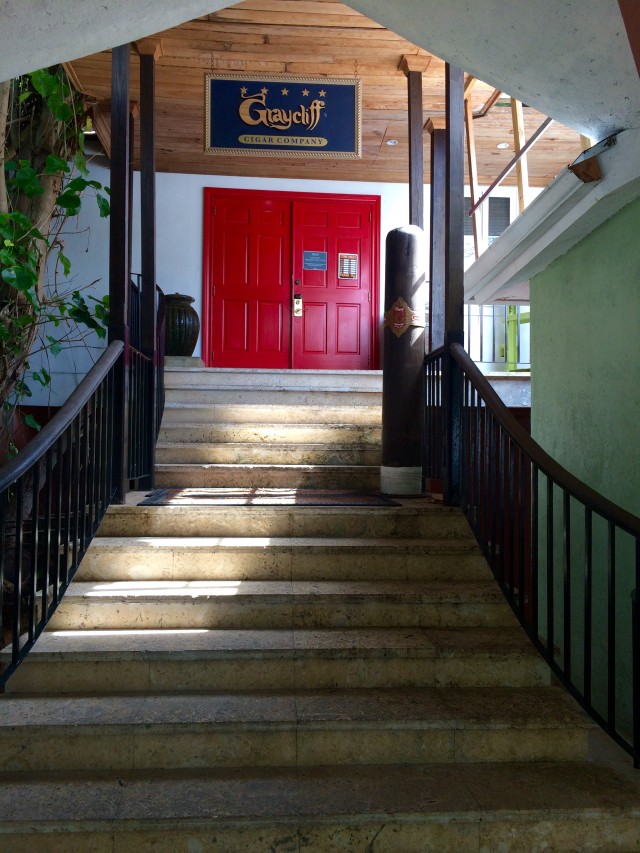
The steps that lead to the Graycliff Cigar Factory:
Upon entering the factory there is a lounge and bar offering espresso and spirits. Alongside is a cabinet humidor containing six lines of the Graycliff portfolio. The represented cigars where: Graycliff Originale, Graycliff Professionale, Graycliff Emerald, Graycliff Crystal and Graycliff Espresso. I was met by Adam Collins the General Manager for Graycliff. Adam is a very personable individual who greeted me warmly. As I shook hands I was given a Graycliff Professionale PG and lit it up immediately. The sweet and earthy flavors of the Professionale made it the perfect first smoke of the day. As I entered the epicenter of the factory which is their boutique rolling room I observed several rollers meticulously rolling vitolas for various Graycliff lines. Graycliff prides itself on perfectly rolled cigars and seeing firsthand you appreciate the dedication to the craft. Adam oversees the day to day operations as well as maintains the quality control and works on blends. In speaking with Adam you can see the passion in his eyes and the excitement he gets from working on a blend and speaking about the factory.
One particular roller that caught my eye was a gentleman rolling what appeared to be a free-form cigar or a cigar without a mold. This is extremely difficult to do as keeping a cigar’s measurements and consistency takes a keen eye and skilled hand. The individual in question was Master Roller Miguel A. Lavadie Duconger who is one of the last free form cigar rollers in the world. As it turns out he was rolling the John Howard Graysmith line which is the ONLY commercial line of cigars dedicated to the free hand cigar rolling style. Miquel makes the cigar using the “Entubado” method which takes the individual filler leaves and rolls them into scroll-like tubes placing them next to each other in the bunch. This method although more time consuming creates more airflow and a better draw and burn making it a more satisfying cigar of very high quality. Watching Mr. Lavadie Duconger work was observing a master at his craft. I’ve visited cigar factories before, seen rollers at their respective tables and even watched rollers attempt free hand cigars but NOTHING like the quality and consistently I saw at the Graycliff Cigar Factory.
Master Roller Miguel A. Lavadie Duconger rolling “Free Form”
The John Howard Graysmith which Miguel is responsible for has two vitolas: “Cannon” a 60 x 7 Parejo and “Buccaneer” a 60 x 7 Piramide. Both cigars have uncut or “shag” feet. The JHG line pays homage to the original way cigars were rolled as well as a nod to the famous pirate John Howard Graysmith whose exploits were legendary and who built the Graycliff Mansion.
John Howard Graysmith Buccanner and Cannon Cigars:
As impressive as the rolling room was Adam took me to the aging room where cigars are stored, bundled and readied for future shipping. Adam oversees fermentation and processing which is a testament to his hands on style of management and adherence to complete quality control. Returning to the rolling room I was able to light up a Graycliff Espresso Pirate which is my personal favorite of the line. The Espresso pirate yielded rich notes of mocha, leather and a bit of spice. The cigar was wonderfully balanced in the medium to full bodied range.
As I toured with Adam he took me down a hallway which I would call the “Cigar Education Wing”. Part tobacco education part museum this area sports framed cigar posters such as tobacco leaf classifications in which primings of each leaf are listed, cultivation methods, manufacturing, and the history of cigar making. Walking the hall and reading the informative descriptions gives a cigar enthusiast quite a lesson on how a cigar goes from the field to your hand. This is the first of its kind I’ve seen and shows how the company wants their consumers to understand the process as well as enjoy their cigars.
Cigar Education wing:
It was at this point I met up Paolo Garzaroli president of Graycliff Cigar Company. I’ve met Paolo on several occasions and I can say he has a true passion for quality, tremendous vison and is a gentleman who believes in family and building relationships with people. Paolo directed me to the display cases that showed cigar memorabilia such as presses, molds and cutters. On the adjacent wall there were photos of celebrities enjoying Graycliff cigars and even such luminaries as Nelson Mandela. The impact Graycliff has had on the industry and consumers is demonstrative in these photographs.
Showcase of cigar memorabilia:
Celebrites and Heads of State enjoying Graycliff Cigars:
Much to my dismay I had to leave all too early as I had a ship to return to. Visiting Graycliff was a priority as well as the highlight of my trip. I thanked Adam and Paolo profusely for the cigars, tour and hospitality. If you visit the Bahamas you NEED to visit Graycliff or do one better and stay on the property. You will be educated, satiated, and puffing away in paradise. I will return as a guest and spend more time at Graycliff which I now call the “Cigar Oasis”.
I recently had the privilege of being invited to a component tasting with Michael Herklots at the Nat Sherman Townhouse on Feb 10th. I’m a big fan of cigar education, and I knew that the component tasting would make for a unique educational experience, so I jumped at the opportunity to attend.
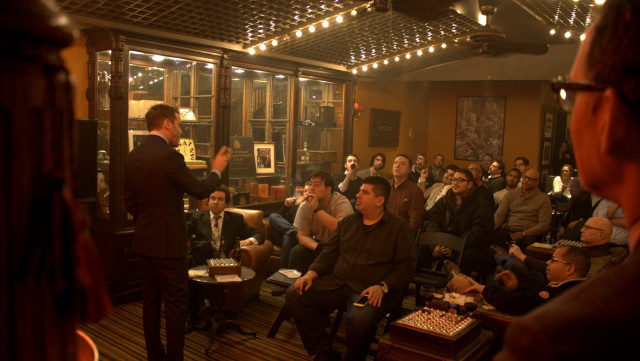
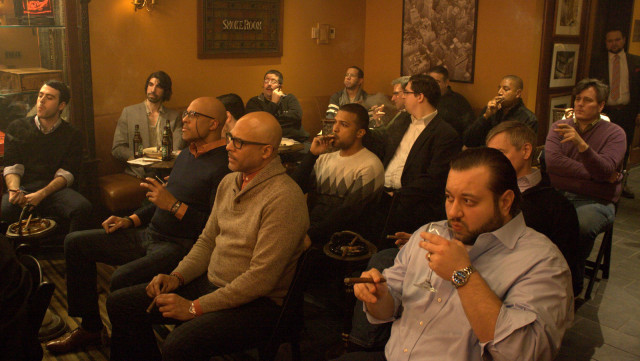
I arrived at 7:15pm and made my way down into the Johnson Club Room downstairs, which was already smokey and occupied by around 30 cigar enthusiasts, mainly bloggers and friends of the Nat Sherman brand.
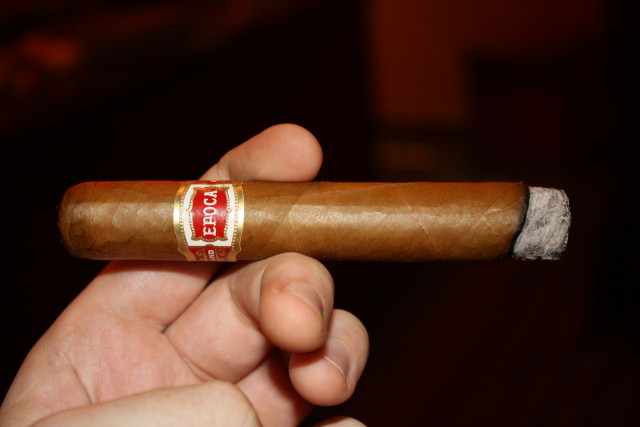
Herklots began the evening with a brief history of Nat Sherman, explaining that “before the brand was a place, and before the place was a man, Nat Sherman.” The first premium cigar sold by Nat Sherman, I was surprised to learn, was Epoca, which was reblended in 2014 to rave reviews.
At this point, Michael started the component tasting, with Nat Sherman staff handing out a short cigar purely made of Dominican Seco, the first component of Epoca. After lighting and comparing notes on flavor, aroma, and palate impact, we moved onto the second leaf, Dominican Ligero, and after that Nicaraguan Ligero. The seco cigar offered light, bready notes with some nuts and a musty aroma. The Dominican ligero (my personal favorite), offered similarly musty notes but with richer notes of spice and leather. The Nicaraguan ligero offered much bigger, richer notes, with a lot more of a kick and pepper notes.
Component 1 – Dominican Seco
Component 2 – Dominican Ligero
Component 3 – Nicaraguan Ligero
All three samples were enjoyable in their own right, but Michael illustrated the difficulty of blending cigars by asking the guests to smoke the first two cigars, then second and third, and finally the first and third at the same time. Each combination was putrid and awful. Then Herklots asked us to smoke all three cigars at once, and that’s where the magic happened: a brief glimpse into the Epoca color palate. The cigars combined to create an experience of flavor and balance reminiscent of Epoca.
The Final Product
Throughout the tasting, Michael did an incredible job describing the intricacies of cigar construction, tasting, and blending. More than that, he did it with a New York charm that warmed the room up and invited guests to stay and smoke after the tasting concluded.
And so the evening was illustrative of the kind of Nat Sherman that Michael Herklots seeks to build: on one hand, an establishment that carries on the traditional feel and overall aesthetic of Nat Sherman. On the other, a fierce commitment to pushing the bounds of the traditional Nat Sherman flavor profile, creating new blends and experiences for the 21st century that are all at once old and new.
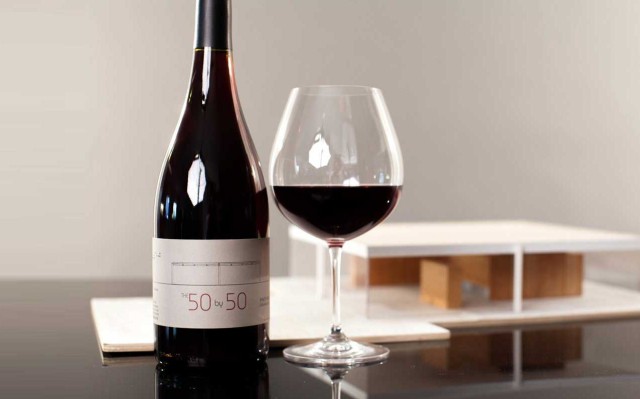
This evening I was fortunate enough to try the 50 by 50 Pinot Noir. The story behind this wine is unique in that it’s a creation of Gerald Casale founding member of the prolific band DEVO. During the late 70’s and early 80’s Gerald and the band began to tour the world extensively. When given the opportunity to visit vineyards in Italy, France, Spain and other regions Gerald jumped at the chance to learn and discover the pleasures of wine. As the story goes his love specifically for Pinot Noir came later on around 1990. Having been fortunate enough to taste the legendary Domaine de la Romanée Conti with friends the love affair began. Years later Gerlad began creating the 50 by 50 Pinot Noir in Sonoma County. The name derives itself from the blending of a 50/50 blend of two Pinot Noir clones; the Pommard and the 667 Dijon clone. Produced in a Burgundian style this Pinot Noir is a treat for the senses. Below are my tasting notes. Enjoy!
Appearance: Beautiful light brick color.
Nose: Some bright cherry and red fruits with a bit of cinnamon and spice.
Taste: This wine starts off with upfront flavors of cherry, a bit of ripe strawberry and cola. Mid palate shows almost coffee like notes with spice and cherry intermingling. The finish smacks of red berries, fresh sage and earth which linger on and on. With some decanting this wine opens up to reveal tart cherry, all spice and a pronounced finish of earth and coffee. Stylistically this Point has the ripe red fruit flavors of a Californian Pinot Noir along with the richness and elegant finish a good Burgundy possesses. The wine is harmonious and for the price of around $34 a very good value for a wonderful Pinot Noir.
Conclusion: Gerald’s passion for wine is evident as demonstrated by his excellent Pinot Noir. Make no mistake this is not a vanity project from a celebrity but an homage to true fans of the grape with all the care and attention clearly shown here. This is a wine I recommend picking up before it sells out!
Last night I had the pleasure of smoking the Illusione/Smoke Inn collaboration which marks the 9th edition of SI’s Microblend series. The Illusione “Pactum” which gets its name from the Latin verbiage “Agreement”, or at that time in ancient Rome it came to mean a “Gentleman’s Agreement”. I can say knowing Abe and Dion personally these are two true gentlemen who seek to provide the highest quality in a cigar for the connoisseur. Being a big Illusione fan I was very excited to try this smoke and here is the first exclusive review you will find. Enjoy!
Blend Specifics:
Vitola: Boxed Pressed Robusto
Wrapper: San Andres Capa Fina Maduro
Binder: Nicaraguan
Filler: Nicaraguan
Dimensions: 5 1/2 x 56
Appearance & Construction
The Illusione Pactum has a gorgeous chocolate wrapper with a nice sheen and slight veins on the sides. The box press is perfect and there are no soft spots with a feel of well packed tobacco inside. The dry draw yielded raisinated flavors and a cocoa sweetness.
Taste & Smoke Characteristics:
Lighting up the Pactum greeted me with earthy characteristics and a distinct sweetness from the wrapper. The first third of the cigar brought on some full tobacco flavor due to the higher priming from the Nicaraguan filler leaves. The ash was sliver and gray and fell off on its own. Midway the cigar brought out a bit of wood, hay and a slight gingerbread note. All the way the Pactum gave the sweetness from the San Andres ‘Capa Fina’ maduro cover leaf which really balances out the smoke. The final third gave a lot of the similar flavors as the last half which is not a bad thing at all. The combination of wood, sweet and rich tobacco hit all parts of the palate and gives you an excellent example of what a balanced smoke is all about.
Conclusion:
I have been continuously impressed with Abe’s Microblend series not just as a concept but knowing the personal attention he gives to each blend and working with the brand owners. Dion of Illusione is a master craftsman and a perfectionist in what he puts out. When these two make a “Pactum” you can rest assured you are getting a smoke worthy of the Roman Empire. Pick these up before they sellout as other Microblends have.
Avialble at Smoke Inn shops and their website if you are intrested:
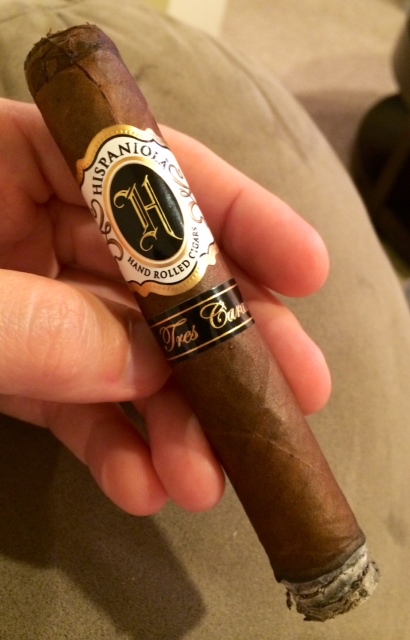
This past week I was luckily enough to meet with the creators of the Hispaniola brand of cigars. Hugo F. Melo, a modest gentleman described with passion his families long history in the Dominican Republic working tobaccos. After generations of distributing aged product for other cigar companies Hugo felt it was time to venture out with his own brand that is Hispaniola cigars. Recently FTNYC had reviewed Hispaniola’s El Trabuco 1844 which received high praise from our staff. Today I smoked their Tres Carabelas cigar and my findings did not disappoint. Enjoy.
Blend specifics:
Wrapper: Havano Oscuro Vuelta Arriba
Binder: Dominican
Filler: Dominican
Size Robusto- 5″ x 55
Appearance & Construction:
The wrapper of this cigar had a nice oily sheen and shows the classic dark color of a Havana Oscuro wrapper. The cigar had some slight veins and a few soft spots to the touch however the foot showed some nicely packed tobaccos. This was extremely well rolled and visually appealing.
Taste & Smoking Characteristics:
The dry draw showed wonderful coffee and wood notes with a salty finish. Upon lighting the cigar offered some dark espresso, oak and leather flavors. The finish was salty which is something I really enjoy in a fine smoke. Midway a bit of spice kicked intermingling with espresso and a touch of graham cracker. The leather seemed to pick up a bit with the salty finish balancing it out. The final third delivered espresso character at its fullest with leather in the background. A well balanced cigar from begin to end.
Conclusion:
The breadth of knowledge from the good people at Hispaniola shows in their Tres Carabelas blend. The draw was superb and the robusto size is a perfect showcase for the tobaccos in this cigar. Tres Carabelas gives a medium to full bodied smoking experience and can easily be appreciated after a fine meal. For those who want an elegant experience in cigar smoking Tres Carabelas is a cigar you need to get your hands on.
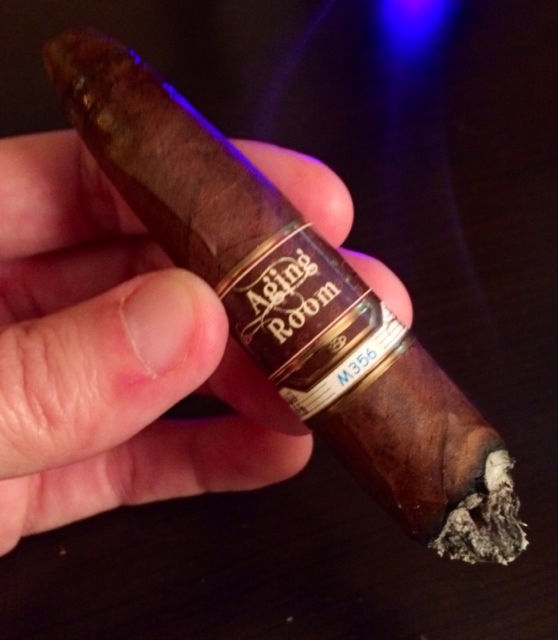
I was lucky enough to smoke another one of Rafael Nodal’s Aging Room creations in this beautifully constructed perfecto vitola the M356 Forte. Rafael of Boutique Blends has hit the mark with his small batch Aging Room cigars and thus far I haven’t found a blend that I didn’t enjoy fully. The M356 line features an extremely limited blend of tobaccos from the Dominican Republic with a Habano seed wrapper and the taste profile was something else. Enjoy.
Appearance & Construction:
The cigar has a lovely sheen to the wrapper that is silky smooth to the touch. A noticeably firm cigar that seems full of tobacco with no soft spots. There were some slight veins around the stick but that didn’t detract from the classic appearance of this well rolled perfecto.
Blend specifics:
Wrapper: Dominican Habano Seed
Binder: Dominican
Filler: Dominican
Size Perfecto- 5 7/8 x 40/56
Taste & Smoking Characteristics:
As I gave a nice size clip to the tapered end of the cigar I got a firm draw that gave a toasty dry draw of nuts and earth. Upon lighting I was greeted with toasty oak and earthiness. As the cigar developed spice and graham cracker intermingled around the coating of my mouth with a roasted nuttiness on the finish. The draw continued to be firm yet delivered a cacophony of flavors ranging from earthiness, spice and some full tobacco notes. Midway the Forte had flavors of hay, cinnamon and a bit of citrus on the end. The final third is where the Forte shined as the roasted nuts and spice returned to offer a satisfying finish to the cigar. The stick throughout was a medium plus for me and provided flavor profiles I enjoy the most in a cigar. Although the burn could have been better I smoked this stick down.
Conclusion:
Rafael Nodal has impressed me once again with his Aging Room Boutique Blends. Despite a firm draw which can be typical for this vitola, the quality of tobacco was stellar. The changes in flavor as the cigar progressed showed craftsmanship in the blend and made for a truly Small Batch stick. If your local tobacco shop carries Aging Room I would recommend grabbing any blend as everything I’ve smoked in the line is smoking well right now. Grab a BIG batch of these!


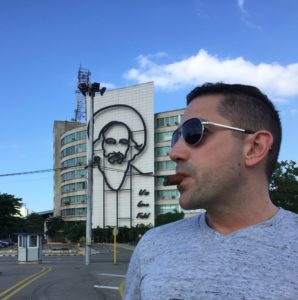 Ah, the mystical Island of Cuba. For the U.S. it’s the forbidden country that secured the embargo on September 7th 1962 when John Fitzgerald Kennedy re-instated the Trading With The Enemy act of 1917. Since then U.S. citizens have only be able to travel to Cuba for very strict diplomatic or humanitarian reasons and return with no goods from the country… until now. Last year President Obama repealed the travel ban on Cuba creating more broad allowances for U.S. citizens to travel there. Better still the former president lifted restrictions on bringing back goods from Cuba to the United States. For beloved cigar smokers this was fantastic news. Having traveled around the world smoking Cuban cigars, finally being able to visit the country and farms where the famed tobacco is grown is a cigar aficionados dream come true. In this first report I will touch upon the ease of travel to Cuba and the state of cigars I found in Havana. Also included is a list of the best places to purchase cigars and where I found some older vintages lying around.