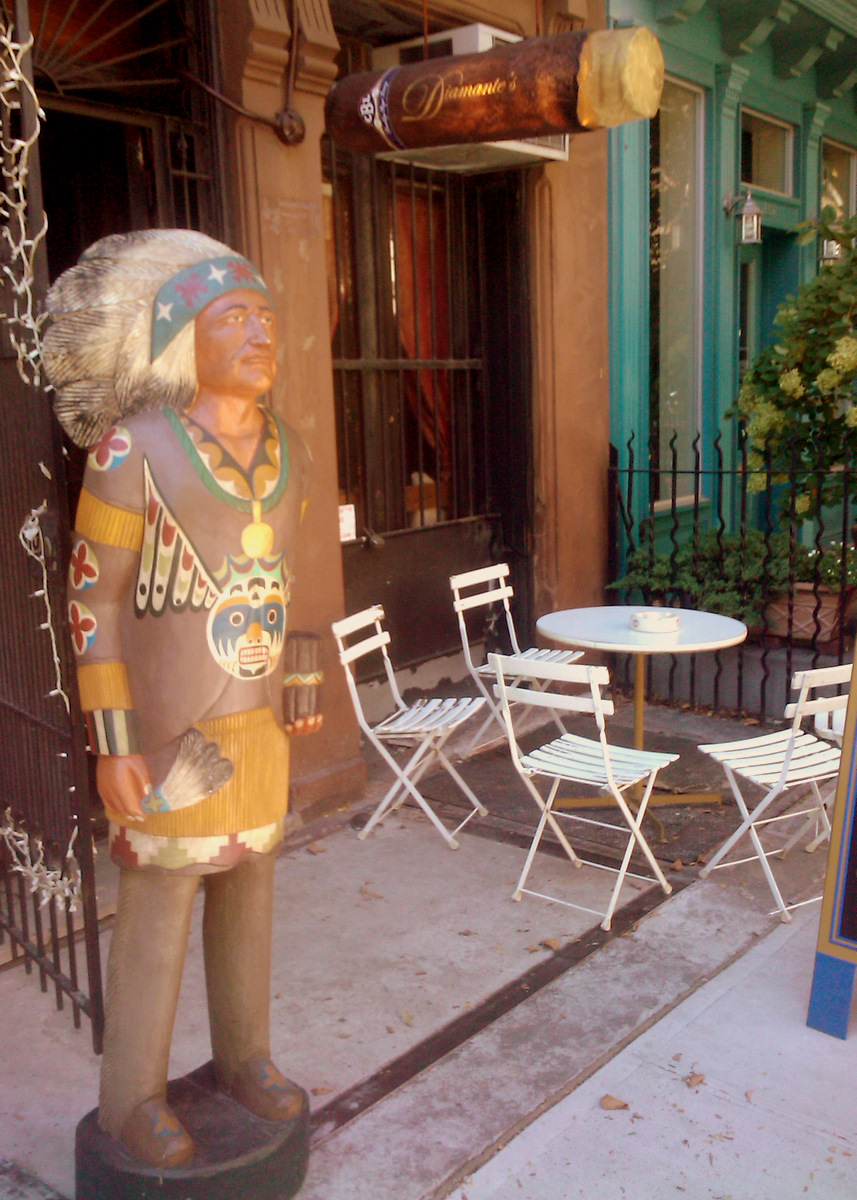
Today I had few extra free hours, so I decided to drop by one of New York City’s newest cigar lounges. Diamante’s Brooklyn Cigar lounge, just off the C train Lafayette stop, really is a great place to drop by for a smoke. The shop features its own boutique blend of cigars, made of Nicaraguan and Dominican grown Cuban seed tobacco. The atmosphere in the lounge is spectacular, definitely one of the most memorable experiences I’ve had since living in New York. I’d write about that now, but I’d really have to go into detail to give the lounge justice, and I think I’ll save that for an article on the lounge itself.
The lounge itself is worth a visit. Or two... or three.
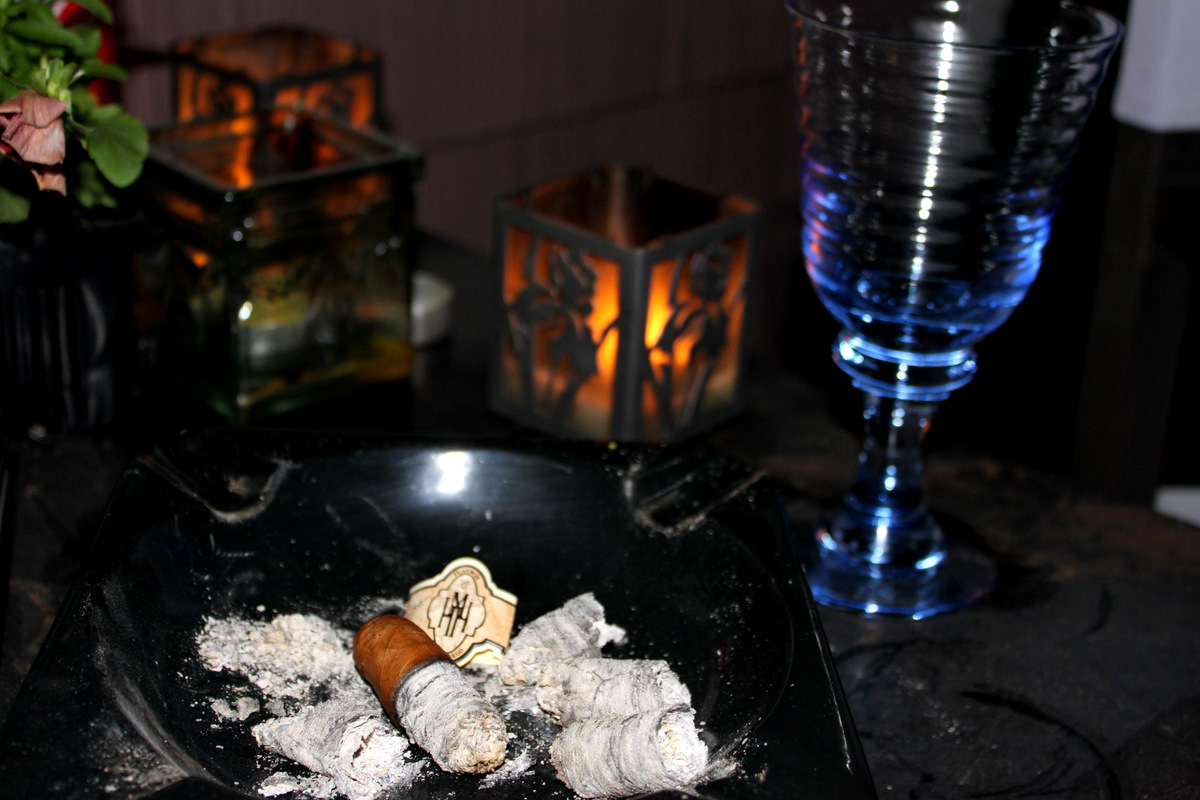
My first cigar at this lounge was the medium bodied boutique blend (torpedo shape). At $12, the price was pretty reasonable for a boutique blend. The lounge does offer some other big-brand sticks, but they were a bit pricey for me. Below are my thoughts on the cigar.
Diamante's Medium Boutique Blend
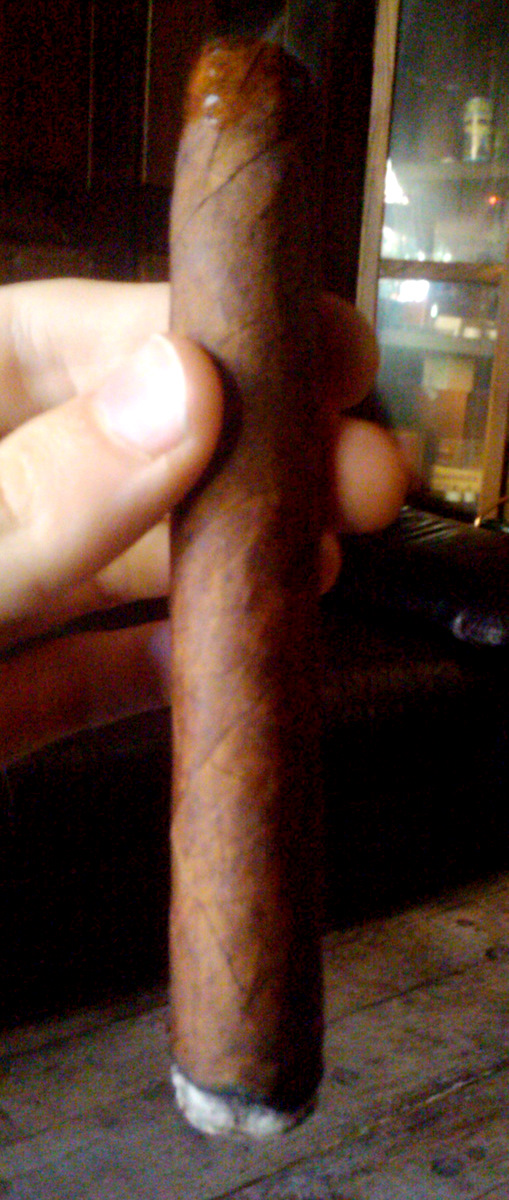
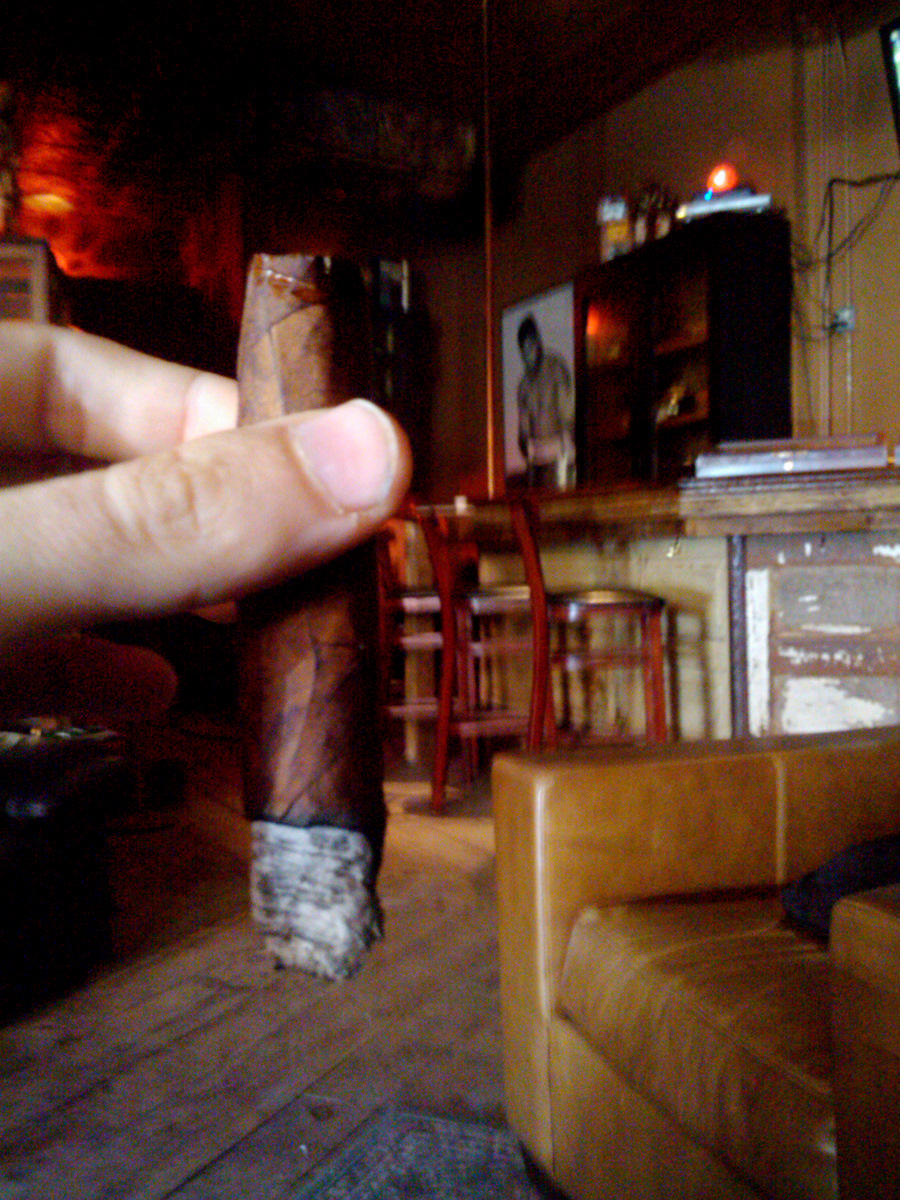
Appearance/Construction: The appearance wasn’t the strength of this particular stick (I say that because I’m not familiar enough with this line to make a broader statement). It was a bit veiny, which some claim adds to the flavor (which for this cigar I could imagine that being true), but veins, especially large ones, tend to decrease the straightness of the burn, which did turn out to be the case with this particular stick. The boutique cigars are also lacking a label, which was a bit disappointing because the lounge is beautiful and has a great vibe that an attractive label could definitely add to. Rolling the cigar in my hands, however, I could tell that the cigar was packed well (confirmed also by the draw), and the hour and a half smoke that followed offered further confirmation.
Taste: This cigar kicked off with a big spice, and actually took me off guard. Behind the spice were hints of woodiness and black pepper. After about the first inch, however, the spice backed off a little bit and the woodiness took a bit more prominence, along with hints of spiciness. I matched this cigar with a cup of Columbian Sumatra coffee, which turned out to be an excellent choice as the two complemented each other perfectly.
At times there was a bit of harshness, but that faded quickly and didn’t detract very much
About halfway
from the quality of the cigar. Around the second half of the cigar, a really wonderful sweetness took center stage along the now subtle spice, and the thick smoke produced by the cigar was earthy and sweet. One thing I kept noticing was the excellent amount of smoke produced by the cigar, and the velvety smoothness of the smoke in my mouth. As far as the burn goes, the veins in the cigar did end up being a bit problematic, but the cigar was generally very good at evening itself out.
Conclusion: This cigar was very good, but I’ll need to try another before I can feel confident in describing it as excellent. At $12, it isn’t an everyday smoke, but I definitely recommend buying one, especially because the lounge is such an excellent place to hang out. Construction and lack of label aside, the taste was excellent and the draw pretty much perfect.
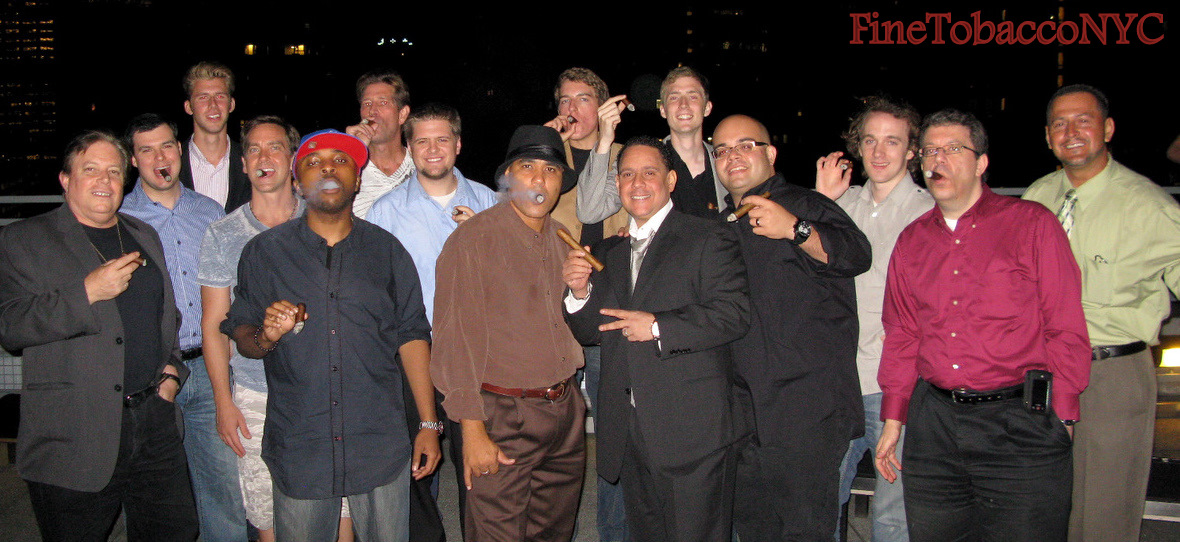
This last Friday (Aug. 27th), FineTobaccoNYC hosted its first ever New York City smoking event on the roof of my FiDi apartment rooftop. Fine tobacco lovers from all over the city (Brooklyn, Queens, Manhattan, even New Jersey!) sent in RSVP’s for the event and showed up at 8:00pm to kick off what would be an excellent night.
Tomas working his magic - click to enlarge
Cigars present ranged from Rocky Patel, Romeo y Julieta, La Flor Dominicana, and Arturo Fuente, to name a few. I started my night off with a CAO Italia, a cigar I have fallen in love with recently because of its spiciness, smoothness, and aroma. By far the most exciting cigars present, however, were the cigars brought by Caballero Cigars, a lounge based in Brooklyn. Mike Lopez, one of the Caballero managers present, described the company as part of a long family tradition in creating quality cigars, which originated outside of the U.S. and has only recently established a base in New York City. Tagging along was Tomas, Caballero’s professional cigar roller from the Dominican Republic, who rolled everyone attending fresh cigars. The cigar rolling was a huge attraction, drawing large crowds from around the roof, even from people not involved in the actual event. For most of the night, if guests weren’t smoking cigars, sipping wine, catching up with old friends, or meeting new ones, they were likely watching Tomas roll his excellent cigars. As a brief side-note, near the end of the night, Tomas rolled me a very special double-wrapped cigar. As I don’t speak any Spanish, I was having a difficult time expressing my thanks until another guest (an architect from Barcelona named Salvador) taught me to say “Muchas gracias por esta excelente puro” (thank you for the excellent cigar!).
TJ and Val talk fine tobacco
The event lasted from 8:00-11:00pm, and in between that time I finished my Italia andhad two handrolled Caballero cigars. The construction on the handrolled cigars was really marvelous, and I had no burn problems at all. The maduro wrappers were beautiful, with a light oiliness and sweet smell that made my mouth water. The cigars I had were medium bodied, and tastes ranged from spice, coffee, woodiness, and sweetness. Tomas probably rolled for two hours, and in that time everyone at the event had the opportunity to try one, free of charge.
Ah, the magic of cigars
Overall, the event was a massive success. The rooftop lounge provided the perfect atmosphere for enjoying cigars, meeting new people, and even engaging in discussion on important issues effecting the NYC cigar community. If you are interested in coming to a FTNYC event, then shoot me an email so that I can add you to our rapidly expanding event mailing list! The next event is just weeks away, so stay tuned!
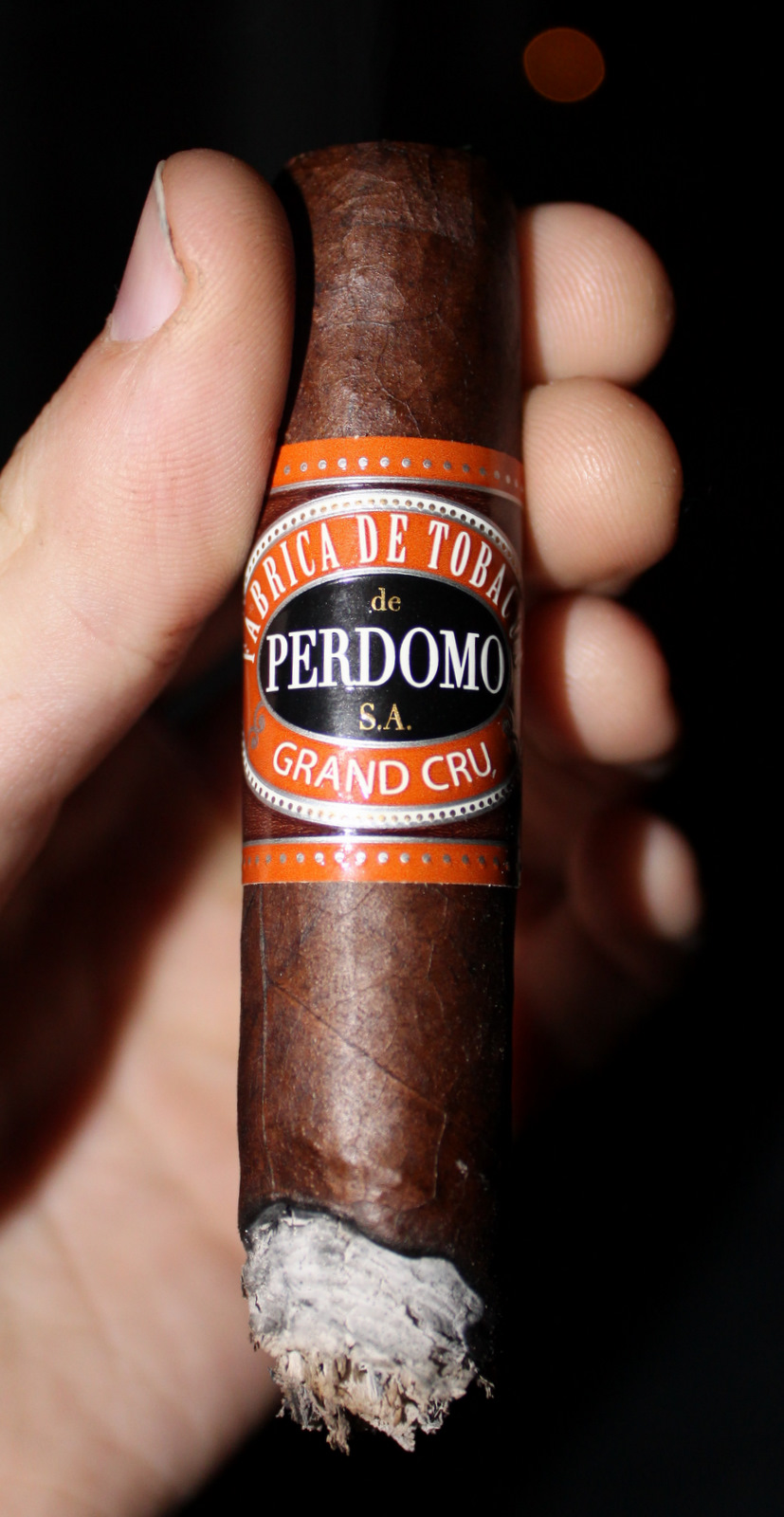
The Perdomo Grand CRU line is a blend of Cuban-seed Nicaraguan tobaccos, wrapped in either a Corojo or Maduro wrapper. This stick just happened to tag along in a sampler that I bought from my local cigar shop. It looked like a pretty interesting cigar, and I saw mixed reviews so I decided to take a look for myself.
Pre-light:
Lots of spice on the pre-light draw. Construction seems alright, though I’ve heard that many others have had burn issues. We’ll see. The draw is excellent and the maduro wrapper is attractive, with very few, if any, noticeable flaws. What I don’t find very attractive about this cigar, though, is the label. It certainly isn’t as bad as others (Dynamite labels are the worst!), but it doesn’t really help convince me that I’m about to smoke a great cigar.
First Third:
Click to enlarge
The first few draws of this stick are pretty harsh. At first, the flavor is a spicy that isn’t very enjoyable. The aroma, however, is a great mix of coffee and dark chocolate – a very enjoyable mocha. After a minute or two, the harshness left, leaving a very smooth smoke where chocolate takes center stage. Excellent. I only wish the burn could have progressed as well as the taste here – I had to touch it up more than once in the first third.
Second Third:
The cigar definitely mellowed out a bit in the second third. A hint of woodiness edged its way in as well, which was a nice change of pace, but I’m not sure that the woodiness was really appropriate with what came before.
Final Third:
The cigar has picked up a bit of spice, and also some harshness. Unfortunately, the harshness never really went away in the last third. The smoke got hotter and hotter, and I could definitely feel the tobacco giving me a buzz as well. Needless to say, by the time the cigar was done, I was very disappointed.
Where the magic happens...
Conclusion:
This cigar was pretty good, but the uneven burn really started getting on my nerves about halfway through. From what I can tell, this is a pretty persistent problem with this line of cigars, so if a good burn is something you place high importance on, then this stick might not be worth ~$7. Still, I have to say that I really enjoyed the chocolaty tones of this cigar, and the exceptionally cool smoke of the first 2/3rds. I don’t plan on buying this cigar again (as an almost-broke college student, I have to prioritize), but if you are in a particularly curious mood, you might give it a try.
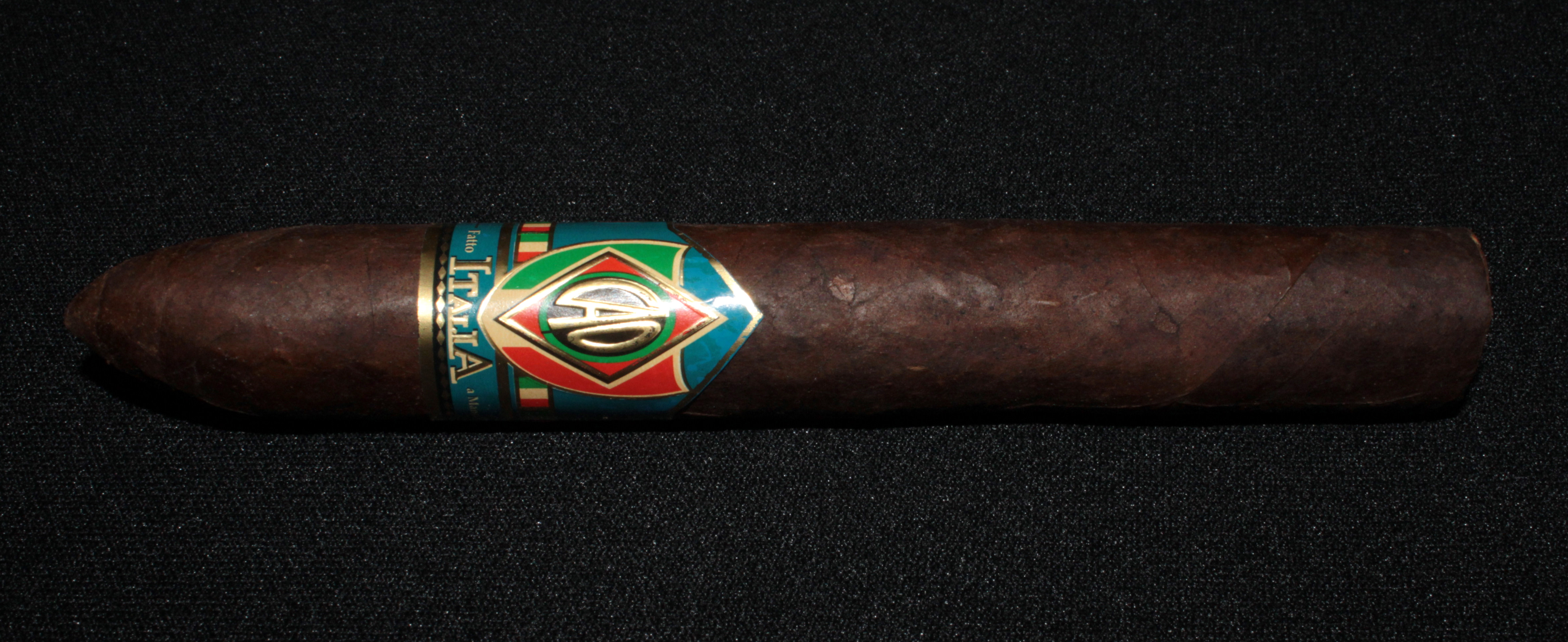
What a cigar! When I chose this stick for my first smoke of “Stogie & Poker Night: Take 6”, I had no idea that I was about to discover one of my new favorites. The CAO Italia is one of few lines of cigars that features Italian tobaccos, which are rare because of Italy’s unique climate.
This cigar had excellent construction, a beautiful maduro wrapper, and an attractive label (which apparently was put on backwards on this cigar). This is a beautiful cigar. There were a few watermarks on the cigar, but from what I can tell this is not characteristic of the line. On the prelight draw I could sense a bit of cocoa, and I was pleased when the dark chocolate flavor came out in the smoke. The draw was perfect.
The first third of the cigar had a combination of cocoa, spice, and a hint of fruitiness. The burn during the first third was perfect, though in the second third the cigar canoed a bit. During the second and third thirds of the cigar, a woodiness emerged and the spice took more prominence in the taste. The burn evened out, the draw remained ideal, and I smoked the cigar until my fingers got a bit burnt.
Conclusion:
I highly recommend this cigar and will definitely be buying more. This cigar is gorgeous, well constructed, and has a robust taste that is simply unforgettable. A few minor inconveniences along the way, but nothing that detracted from the enjoyment of the cigar too much. A new favorite.
G’day fellow Brothers and Sisters of the Leaf. I am extremely excited to be a part of FineTobaccoNYC. I have known Matthias for almost 3 years now and have enjoyed watching him fall in love with premium tobacco just as I did as well as helping him on his journey when I could. So when he came to me with the idea for FTNYC I knew that I had to be a part of it.
I am currently working in the premium tobacco industry as the Client Services Associate for Davidoff of Geneva’s Madison Avenue store. I finally have a job that is in line with my passion and I love every minute of it.
When I am not at work I try to immerse myself into the cigar culture in ways that are non-work related. The main way that I have done this is I started The Belicoso Brothers Cigarcast, a weekly cigar podcast that I co-host with my best friend, Peter Work. You can check us out at www.BelicosoBrothers.com and on iTunes under Belicoso Brothers CigarCast.
I love to help people explore and grow in their own journeys with premium tobacco and will never walk away from a cigar related conversation, so if anybody has any questions relating to anything premium tobacco I would love to answer them. You can send your inquiries to info.ftnyc@gmail.com.
I will leave you all with one of my favorite quotes relating to premium tobacco: “A cigar ought not to be smoked solely with the mouth, but with the hand, the eyes, and with the spirit.” – Zino Davidoff
If I was honest, I would admit that the first time I saw the label of this cigar, I was tempted to think of it as a simple novelty cigar: some company wanted in to the cigar industry, so they produced some overpriced, subpar cigars. Boy was I wrong.
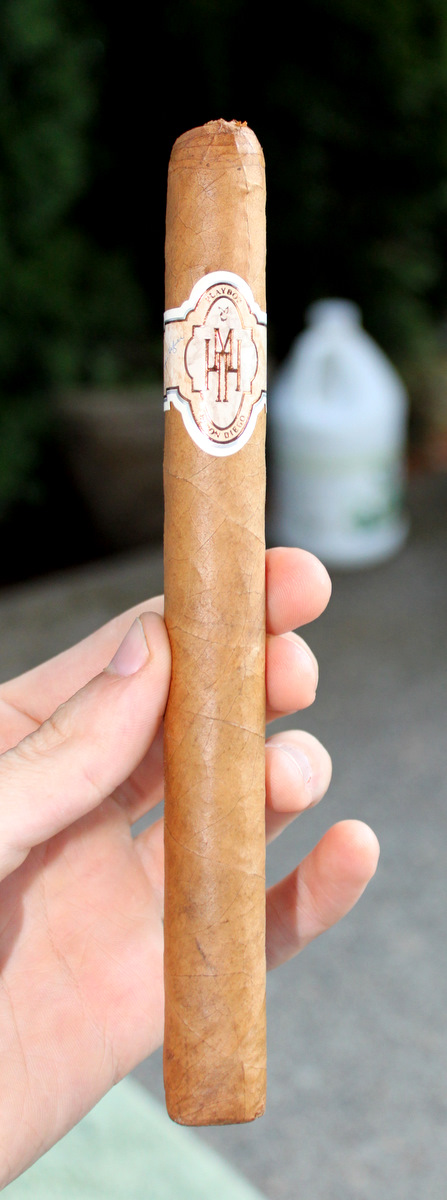
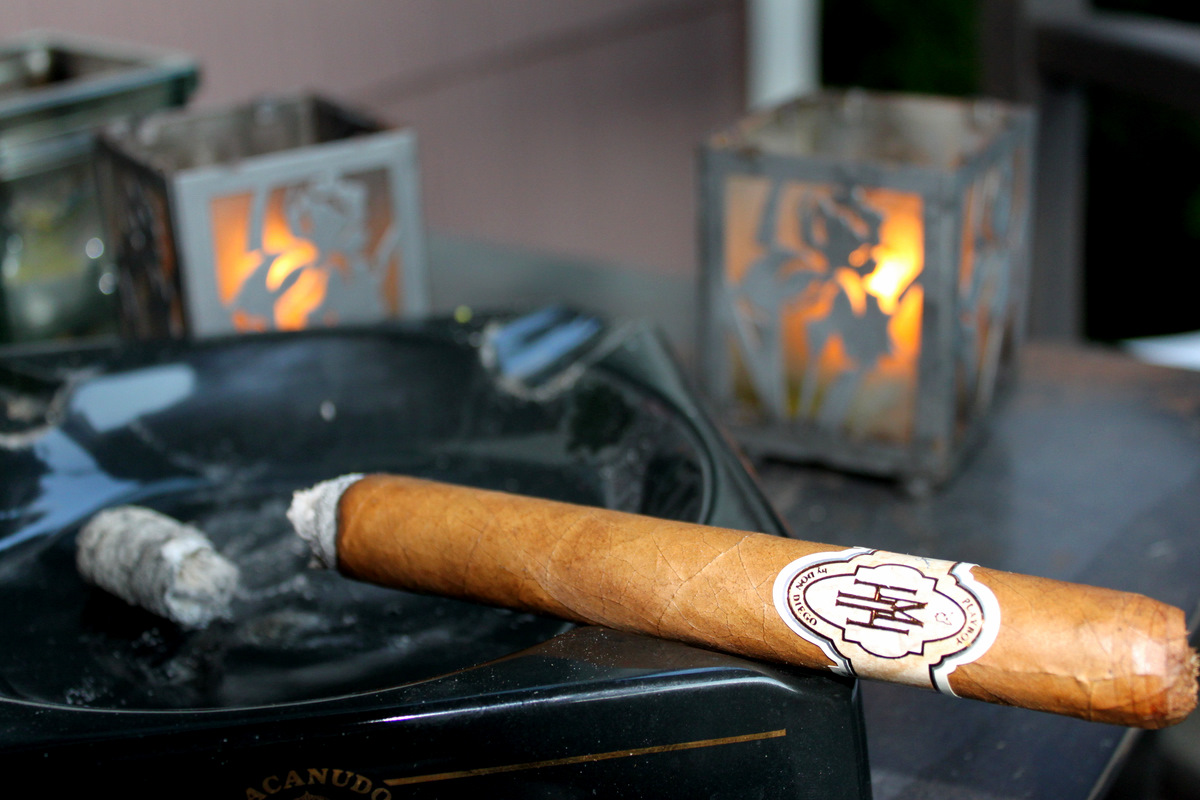
The Dominican Don Diego Playboy Lonsdale has a Connecticut shade grown wrapper. The cigar is a very mild cigar, in strength and in body – so not normally a kind of cigar that I smoke. I have to say though, this smoking experience was excellent. The cigar was great, and the evening was a mild 80 degrees as the sun set over the Oregon foothills. About 45 minutes in to the smoke I also had a few neighbors drop by to relax, drink some beer, and talk about tobacco and gun regulations. It was great. Here are the notes I took on this cigar.
Pre light:
For this stick I used a straight cut. The pre light draw was firm, but not restrictive. The construction was excellent – consistent firmness, no visible flaws, and the texture of the wrapper was delightfully smooth and slightly oily. The smell of the cigar seemed faint, but it really came out when I lit it up.
First third:
A beautiful sight - Click to enlarge
The first few pulls were mild in body and strength. I couldn’t quite describe the taste, but it was delicious. It was very unique, with a hint of spice and saltiness that made my mouth water. The smoke was cool, and the word savory about sums it up. Maybe the best indication of how much I was enjoying the cigar was that I wanted to stop taking any notes. I just wanted to sit, listen to Pink Martini, and blowing a few lazy smoke rings out into the sunset sky. That’s pretty much the definition of relaxation and enjoyment in my book.
Second third:
The second third began with an addition to the experience that beats any development in taste: the neighbor dropping by to sit down and enjoy some quality beer and good conversation. A few minutes later, another neighbor drops by that I hadn’t met yet. He was a really nice guy, and I grabbed a chair while he grabbed a beer so he could join in on the conversation.
Any cigar is better with friends
As far as the cigar goes, the taste grew stronger in the second third. It also took on sweetness and a hint of woodiness that I thought really added to the experience. The smoke stayed cool, and the burn remained almost perfect.
Final third:
I finally discover the elusive aroma. The smoke is a combination of saltiness, spiciness, and a hint of fruitiness that amounts to a very unique combination. If someone described an aroma like that to me, I might not find it that attractive, but it really was excellent.
The last fifth of the cigar got pretty hot, and I considered setting the cigar down for good, but I just couldn’t stop – I was enjoying it too much.
Conclusion:
The end of a great smoke - Click to enlarge
I enjoyed this cigar immensely. Part of it, to be sure, was the environment – a beautiful night with friends, good music, and lively conversation. Even without that, however, the cigar had a unique and memorable taste, with great construction, a good draw, and a perfect burn. The smoke was cool, and the savory taste was easily identified. There were also some subtleties like the hint of woodiness and fruitiness that made the cigar a journey.
When people ask me, “what are you afraid of?” My response is usually, “Hm… uh… well I dunno… spiders maybe?” The fact is, there just haven’t been many things in my life that truly terrify me, although if I were honest I’d say that the idea of moving back to Oregon after I graduate this year scares me (if you have any leads on jobs open in New York City, please let me know!).
A few nights ago, however, I met what I now consider the most terrifying force for evil on all of God’s green earth: tobacco beetles.
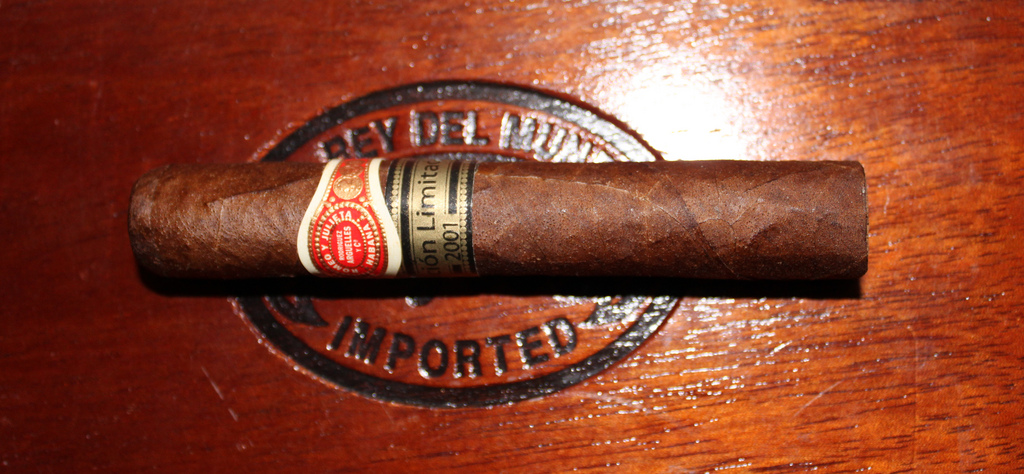
The cigar above is a Romeo Y Julieta LE 2001 Robusto. A good friend of mine gave it to me after she returned from a class in Costa Rica. I noticed it was a little bit dried out, so I decided to try to re-humidify it. I left it in my cigar box for about a month, not knowing I was in for a bit of a surprise. Fast forward a few night, and now I’m reading articles online about an insect that I would never have in my worst dreams imagined existed: Lasioderma Serricorne, otherwise known as tobacco beetles. I saw a picture of a cigar with a few small, pin-sized holes – and realized with a sinking feeling of dread that the same Cuban sitting in my humidor had two of those holes. I read this at about 12:30am, and here was my mental reaction:
Oh. My. God. Those… things… killed…
OH MY GOD! They are in the humidor with the REST OF MY CIGARS!
Still, I wasn’t sure if they were the same, so I ran to my room, pulled the cigar out of the box, and tested it the way I had seen online: holding the end of the cigar over the sink, I tapped the foot with my finger. To my sleep-deprived astonishment, a flurry of little pieces of black beetle-excrement dropped into the sink. I sat there for the next half an hour trying to make sure I got all of the stuff out.
The beetles bored holes through the outer wrapper leaf of the cigars
From there, I wrapped the cigar in a plastic bag and threw it in the freezer, along with all of my other cigars (separately packaged). I wanted to kill any of those lingering bastards just in case they had crawled into any of my other sticks, which thankfully I’ve learned they didn’t. Two days later, I moved the cigars from the freezer to the refrigerator, and a day later moved them back to my humidor after I had cleaned it from edge to edge to make sure none of the tiny critters had stayed in the box.
Now, you may be asking yourself, “why did you put the destroyed cigar back in the humidor?” That’s a great question. Perhaps it’s because it was such a pretty cigar. Perhaps I thought maybe it was still smoke-able. And that last one is partially true – I didn’t know if it would still be smoke-able, but I decided to take one for the team just for your benefit.
Can you smoke a cigar that had tobacco beetles? Let’s find out…
Yesterday, I pulled the cigar out of the (at this point) separate box and cut it with all I had on hand – a single-edge blade. Needless to say, it didn’t cut very well, but it was good enough. I lit it and my smoking experience lasted maybe 5 or 10 minutes. It was obvious right off of the bat that smoking a destroyed cigar (even with just two pin-holes) was not something a cigar smoker should do.
The taste of what should have been a wonderful cigar made me want to cry. It was as if there was an epic battle going on between the burning of the tobacco that was still intact and the already-digested tobacco that still lined the inside of the cigar.
I realize that’s pretty visual, but bear with me a moment while I describe the taste of burning insect excrement:
There are few appropriate words I could use to describe the taste. The first that comes to mind is stale. The smoke seemed lifeless, completely dead – without the flavor and vibrance that I enjoy in every other smoke. The first time I lit the cigar, it just didn’t seem to want to light. The tobacco was red hot, but there was definitely problems with the structure of the inside of the cigar. Many of the inside layers of filler tobacco were completely chewed up by the beetles.
I decided to cut the cigar a few inches down and see if I could achieve a better draw. Unfortunately, it worked. There was heavy acidity. And perhaps the most disgusting part of the whole ordeal was that the smoke didn’t ever seem to leave my mouth. I found the taste and texture of the burning, rotted material sticking around in my mouth, even after I had put the cigar out and rinsed my mouth with water twice! I also started to feel a bit sick after about ten minutes. Gross.
Final verdict: Can you smoke a cigar-beetle infested cigar? Technically, yes. My advice, though, is if you get tempted to smoke a beetle-ravaged cigar that has the tell-tale signs of infestation, DO NOT DO IT. I know it is heartbreaking, especially when it is a cigar (or cigars) you cherish, but you have to toss them and then immediately ensure the safety of your other cigars. If you are still tempted after all of the above, though, then just imagine this: cutting the cigar, putting it into your mouth to light it, and feeling little, tiny legs crawling into your mouth. An extreme warning? Not at all.
Alright, so let’s get to some solutions, shall we?
How to get rid of tobacco beetles…
There are a few methods, but the most common is by using the freezer. I’ll be 100% honest with you: if you have a few cigars that seem to be affected, do not try to revive them: throw them away. The freezer method outlined below exists to save all of the other cigars in your humidor. To reiterate: throw away any cigars that already have pinholes in them or have what looks like dust falling from the foot when turned right side up.
Here’s the method to protect your cigars from tobacco beetles:
Place all of the cigars that you want to treat in a ziplock bag. Then double bag using another ziplock bag. Having a tight seal is critical to avoiding issues with freezer burn.
Place the bags in the freezer for at least 24 – 36 hours. This kills any remaining tobacco beetles and ruptures the eggs of any larvae.
After 24 – 36 hours, remove the bags and put them into the refrigerator. Let sit for three days. It is critical that you don’t put the cigars into the humidor straight away. The sudden increase in temperature will cause the outer wrapper leaf to expand too quickly and rupture, meaning all of your cigars will unravel.
Once the three days are up, move your cigars back to your humidor.
Of course, you also need to take care of your humidor during this time. So, while the cigars are in the freezer/refrigerator, you should:
Use a vacuum hose on the inside of the humidor including corners.
Use a clean, slightly damp towel to wipe down the inside of the humidor.
Let dry.
Repeat steps 1 – 3 depending on how paranoid you are.
Complete
In all seriousness, you shouldn’t need to clean your humidor multiple times, but damnit when your talking about losing hundreds or even thousands of dollars worth of cigars, it pays to be a bit cautious.
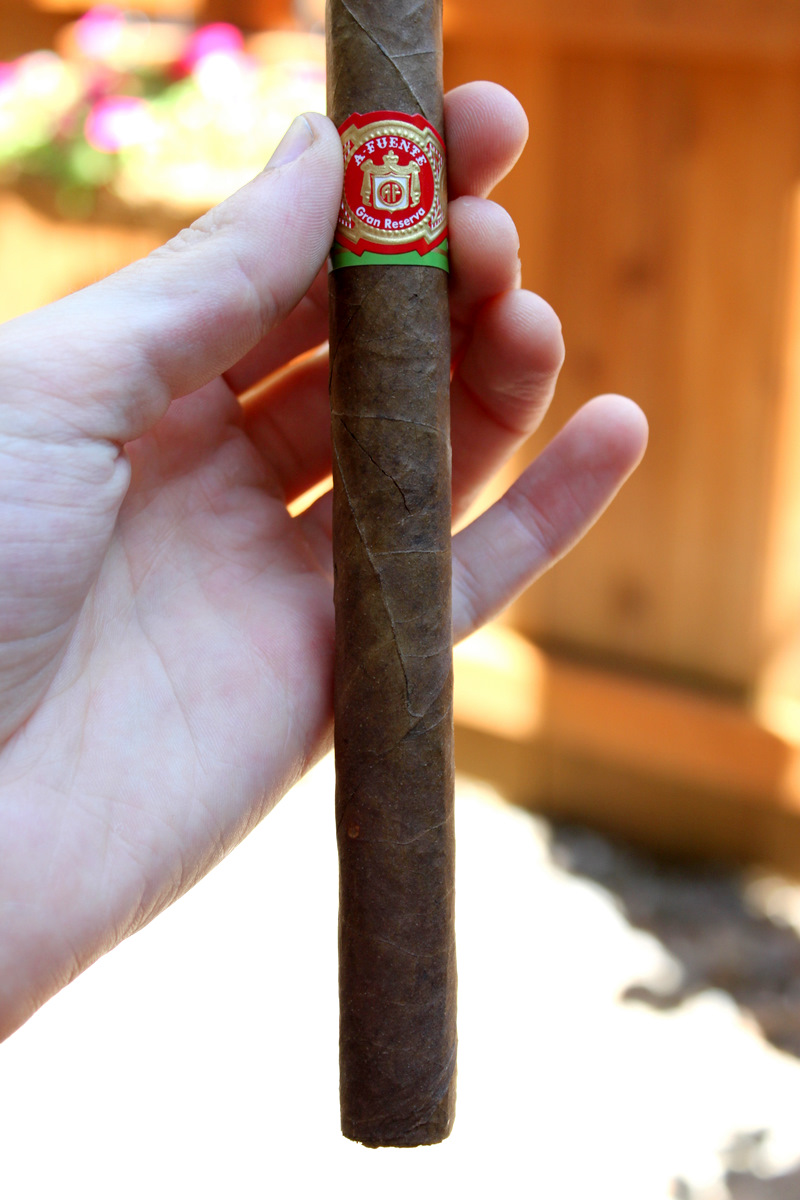
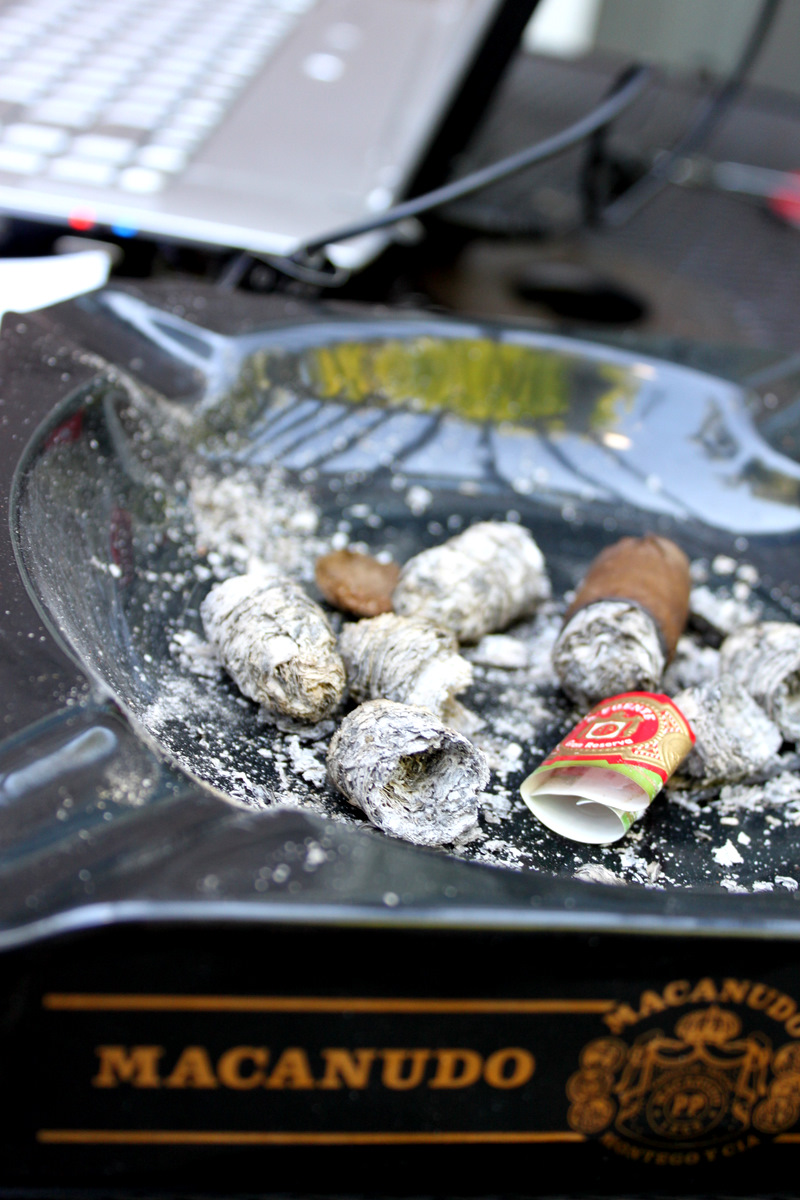
Tonight I enjoyed an Arturo Fuente Gran Reserva Churchill that was given to me by a good friend of mine. I’ve been blessed with many friends, including a few who bless me with cigars from time to time – that is always a treat. I’ve probably had five of these Dominicans before, and I have found them to be very consistent in terms of taste, build, and overall quality. The only problem I’ve consistently noticed with this cigar is difficulty achieving an ideal amount of smoke on the draw.
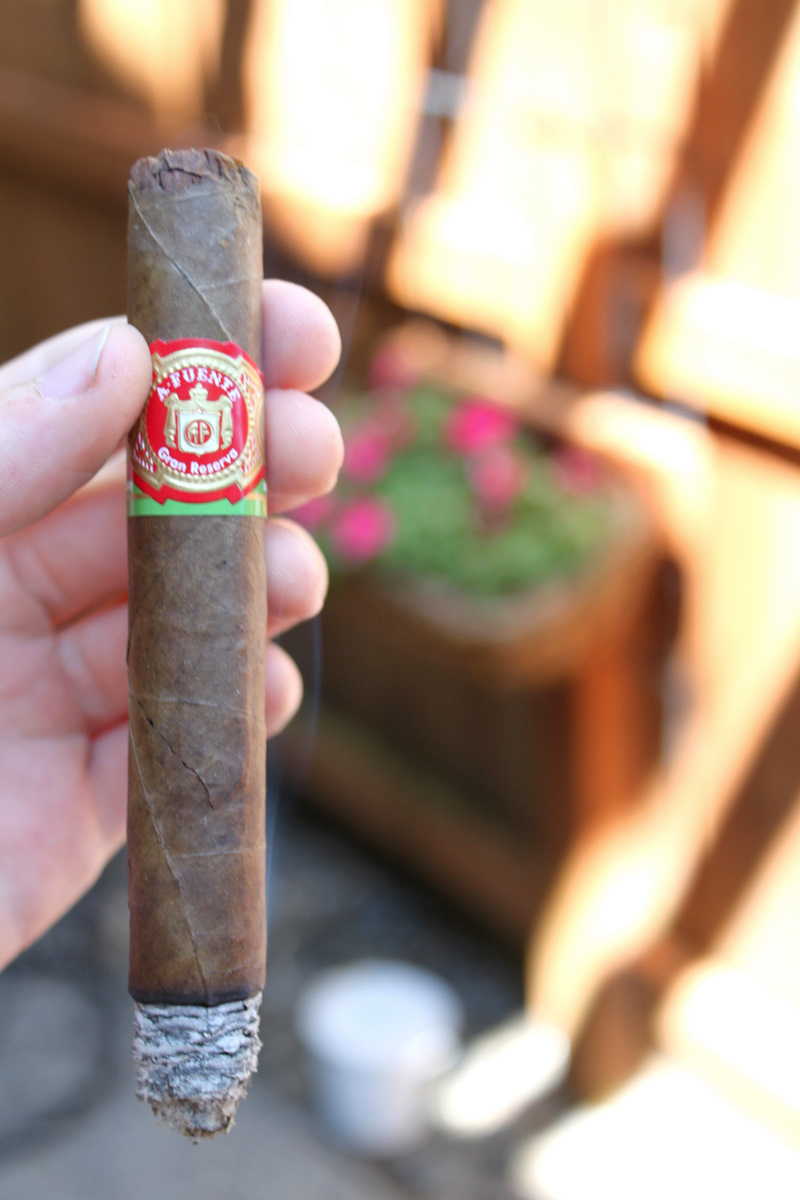
The construction of thiscigar, however, was a bit disappointing. It was not packed consistently, and I noticed spots of discoloration (you can see them if you enlarge the image above). There was slight peeling on the natural wrapper as well. As mentioned, though, this is not characteristic of this line of cigars, at least in my experience. The other four in my humidor show none of the same problems, so I’d say the construction here is an exception to the rule.
About halfway through - Click to enlarge
The smell of the wrapper was faintly sweet with a hint of nut and cedar that really exploded after I lit the cigar. The first third was mild in strength and body, with subtle nuttiness to the taste and a sweet aroma, which I really enjoyed. There was also a bit of leather in there – a nice touch. The burn wasn’t very even, which bothered me, but I found that it had evened itself out by the second third.
The last two thirds were very similar – not a lot of change as far as taste goes, which to some might be a disappointment. The cigar did take on more body as it burned closer to the label. After I took the label off, however, the smoke became bitter and the cigar overheated. That really annoyed me, because I typically enjoy the last few minutes of a cigar the most.
Conclusion:
The end of a good smoke
I’ve never smoked a Fuente that I didn’t enjoy, and this cigar was no exception. I’ve seen this particular cigar described as a medium bodied cigar, but I feel like that is a stretch – seemed mild to me. There were a few problems for sure, but for a cheaper smoke (~$5-6) I have a hard time not recommending it to anyone looking for a mild or mild-medium cigar.
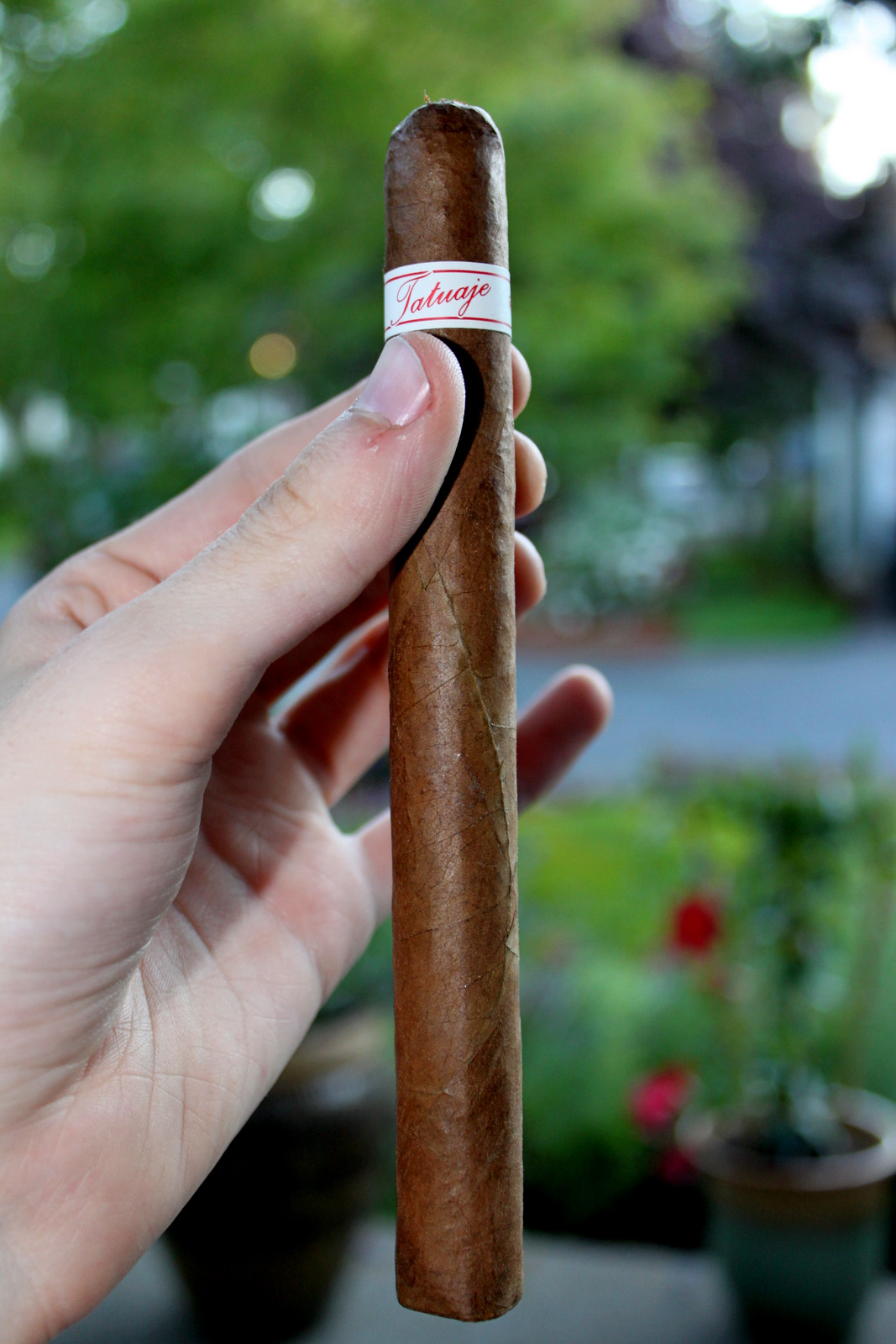
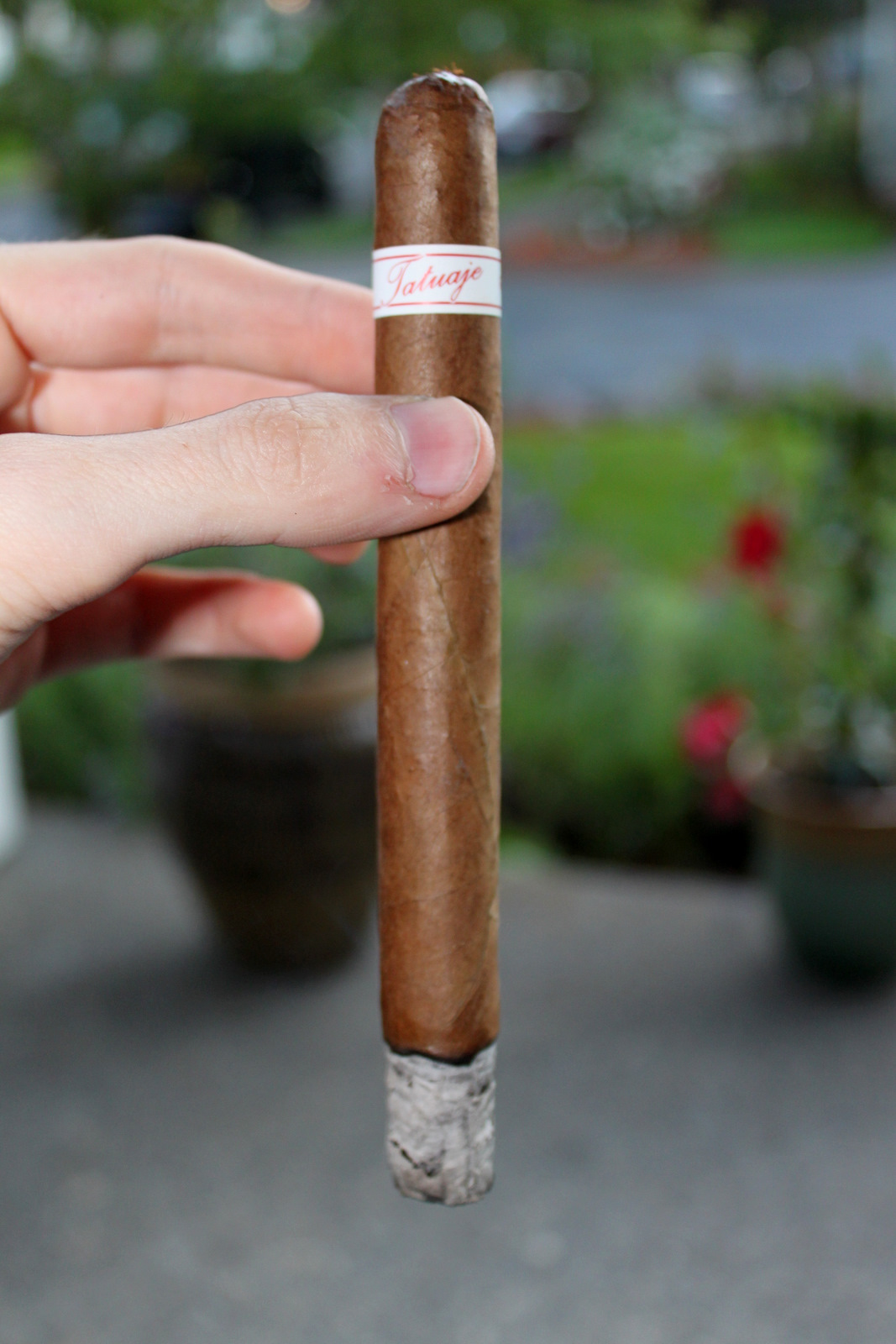
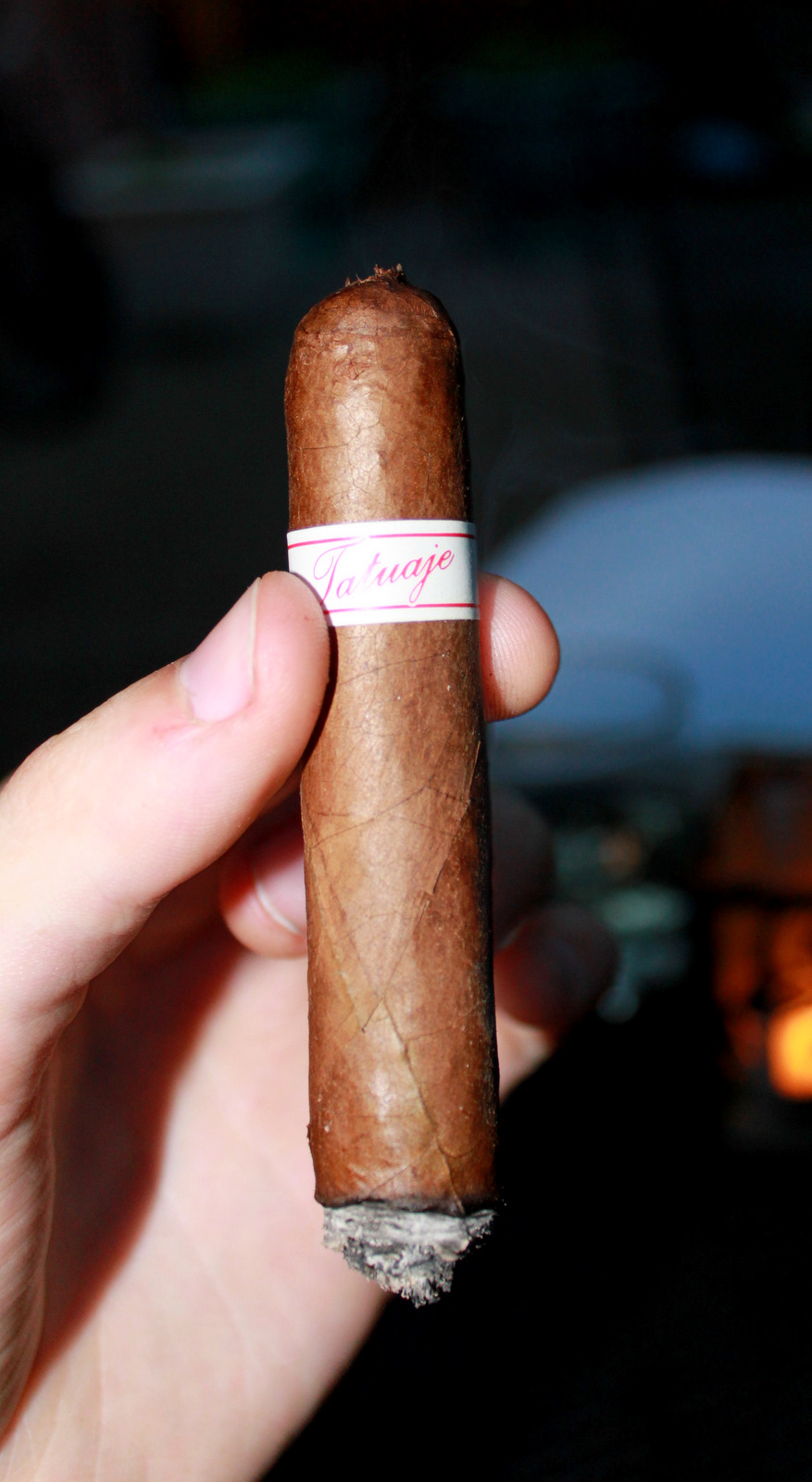
The Tatuaje P4 Churchill that I enjoyed this evening was a strange cigar. Lots of highs, and about as many lows. From what I’ve read from other reviewers, P4 line cigars are normally medium bodied cigars. Tonights stick just couldn’t seem to decide whether it was a mild, medium, or full-bodied cigar. Throughout the smoke, I took notes on the flavor, aroma, and construction of the cigar.
—————————————
First third of the cigar - Click to enlarge
– Before lighting, I took note of the construction of the cigar. Seems to be very well put together, the texture of the wrapper is smooth and solid. The smell of the Nicaraguan wrapper is light and sweet. Feels like it is going to be a pretty mild smoke.
– Lighting the cigar is a bit harsh, though I’ve found that to be somewhat typical among lighter cigars. The taste is noticeably sweet, with a hint of spice to it. The aroma of the smoke is pleasantly sweet – strong, but not overpowering. Also a hint of woodiness.
– About a quarter of the way through, the burn is solid – construction seems very good. The burn is creating a great ash that is mainly white with lines of grey. The wrapper smells great on the pull and complements the taste well.
Half-way - Click to enlarge
– About half-way through, the cigar is taking on more spice to the taste and aroma. Just past halfway, the sweetness has continued to be replaced by spiciness – a bit too much for my taste, and I don’t like the hint of acidity that is emerging. The burn, however, has remained almost flawless.
– The last third is taking on a harshness that I do not like. This could be a sign of the filler being underpacked. The cigar doesn’t seem to want to cool down, and has started burning more quickly. The acidity and over-spiciness is making me want to retire this cigar, and if it doesn’t correct, I will. On a positive note, my black lab Toby just came outside and seemed to be enjoying the aroma – ultra spicy and harsh though it is.
The last third as the sun goes down - Click to enlarge
– Just when I’m about to put this cigar down for good, the sweetness characteristic of the first half returns like an old friend. The harshness isn’t fully gone, but it is starting to draw down. I decide to finish the cigar, and the last quarter surprises me by redeeming the last ten minutes or so of smoking. The harshness has drawn almost completely to a close, the wonderful woody sweetness is back, and it has cooled down dramatically.
Final note: “Mixed feelings.”
—————————————
Conclusion:
At $4 a stick, the Tatuaje P4 Churchill was almost what I expected. The construction was a huge plus, and the way it burned was encouraging. The strength of the spiciness and emerging harshness in the last half, however, made it a frustrating smoke. The cigar teetered between mild-medium body and full-body, and that lack of consistency brought the level of enjoyment way down. The fact that it toned down near the end was nice, but not enough for me to give this cigar high marks.
Of course, I should disclaim that I have only had this particular stick once, so I cannot definitively caution readers away from this cigar – but I don’t plan on spending the money on it again.
If you are reading this post, chances are you are aware of the new taxes that the New York state legislature have heaped onto already existing tobacco taxes in the state. And like previous legislation, the new taxes fail to discriminate between fine tobaccos usually enjoyed in moderation (pipes, cigars, etc.) and the common cigarette. But we really shouldn’t be surprised that state and city politicians seem intent to remain ignorant about basic distinctions between fine tobacco and common cigarettes. After all, it is in their interest to stay ignorant: ignorance allows politicians to to exploit the democratic process to target all smokers for funding.
At its most basic level, though, fine tobacco lovers should realize that new taxes are simply a more obvious manifestation of age old politics: group a (revenue hungry politicians) joining group b (well-meaning anti-tobacco groups) to unfairly, unreasonably, and punitively tax and coerce group c (those who enjoy tobacco) out of their money and their individually chosen lifestyles.
What is most interesting about New York City as a case-study for tobacco public policy is how tyrannical and simultaneously counterproductive it ultimately is. Recent decades have seen NYC develop a legal precedent for higher tobacco taxes and tighter smoking regulations. This public policy mix, however, has and will continue to have dramatically negative effects on individual liberties and the tax revenues that politicians today are so desperate to take from vulnerable groups of citizens. As the city bans smoking in more and more places, many fine tobacco lovers have had to move to lounges simply to have a place to smoke. This is a bearable scenario as long as cigars/fine tobacco stays reasonably priced. Unfortunately, tobacco tax increases push prices up, which effects customer purchase decisions – so less go to lounges. Lounges find themselves more and more burdened by taxes, regulation, and a dwindling market, and ultimately go out of business. Smokers of all types (even moderate cigar smokers) suddenly find themselves with overpriced products and no place to smoke. Anywhere.
The essential result is a government mandate by the coercive power of taxation and regulation to make you live your life a certain way.
The causal chain can be summarized as follows:
1. Government implements tobacco taxes.
2. Some people (on the margins) stop smoking.
3. Government bans smoking in public places.
4. Individuals must go to private locations (lounges or home) to smoke.
5. Government wants more money, and raises taxes the easily taxable: tobacco.
6. Taxes are passed on to consumers, and less can afford lounges/shops.
7. Tax burden and decreased market close lounges.
8. Smokers are left with almost no locations to smoke legally.
9. Some smokers break the law, many cannot afford to smoke/abide by the law.
10. Tax revenue from smoking drops off – politicians have overtaxed and exhausted tobacco users. They now turn to increasing taxes on the rich, businessman, other products, or the poor through inflation (on the federal level).
Result: Individuals for all intents and purposes lose the freedom to smoke. The government has coerced (ultimately at the barrel of a gun) a particular set of values and norms on a large group of individuals. The government destroys a source of revenue.
No one wins.
The most discouraging aspect of the current political trend, though, with respect to tobacco taxes and regulation is how obviously short sighted it is. State and city policy makers don’t understand the importance of basic incentives. As taxes rise, rational smokers will undoubtedly begin to wonder, “if tobacco is so expensive here, why not simply purchase it elsewhere where the taxes don’t apply?” Evasion of unreasonable taxes takes many forms: some may buy online, through unregistered dealers (aka the black market), or will simply drive across state lines. Thus as the state raises taxes in the hope of increasing tax receipts, they will ultimately begin pushing revenues to other states or organizations. No one benefits. State tobacco revenues will stagnate, some smokers will be forced to quit, and some will still smoke – but only after more hassle and frustration.
Does all of this sound extreme? I think so. But then again, take a look at the tax increases in the past ten years, and you will realize that imagining taxes perpetually increasing really isn’t that hard.
And so I am stuck wondering when politicians and those who hate any and every form of tobacco will realize that democratic theft and tyranny, aside from being morally reprehensible, actually won’t solve any problems in the long run. We’ve tried Prohibition before – why should anyone believe that half-assed Prohibition will work any better?