I came across Jeffers Creek whiskey after I saw it on sale at Gary’s Wine and Marketplace on Route 23 in NJ for $20. I had stayed away from it the last time I visited because it looked clearly like a cheap knockoff of Old Weller Antique wheat whiskey, but I noticed it had a Gary’s “recommendation” this time around so I figured I’d give it a shot.
So let’s get on to the review.
Specifics
Spirit Type: Bourbon
Proof: 80
Bottled by: King’s Mark Company (Louisville, KY)
Appearance
Well let’s start with the obvious: the bottle design is an exact ripoff of Old Weller wheat whiskey. The typeface, label design, shape of the bottle, and even how the top label is centered are all exactly the same. I wouldn’t be incredibly surprised by this if Jeffers Creek was owned by the same company, but nope: different companies (Weller is Buffalo Trace). Wish I could tell you what the rational here is, but I can’t — if you can, please do drop in the comments (UPDATE: Thanks Mark for the heads up – this whiskey is indeed produced by the same company as Weller as identified by the UPC code!).
The color of the whiskey itself is a yellow tinged amber. When I pour the first drops and move it around in my glass, I’m surprised at how the liquid clings to the walls — syrupy, similar to something like a Makers.
Nose
Lots going on in the nose, but the first thing you notice is the burn that stings if you breath in a little too deeply. Hiding behind the intense fumes is oak and caramel.
Taste
Much like the nose, the first thing you’re likely to get with Jeffers Creek is a bit of gasoline. Behind it there are some pleasant notes of caramel, oak, and corn. After that, we get into more trouble when we get to the…
Finish
Long, sweet, and more than a little burn.
Conclusion
This is no Weller. But this also isn’t an awful whiskey. Sure for $20, I’d easily take an Evan Williams 1783 instead. But this isn’t some watered-down distillery backwash either. If you’re feeling conflicted about buying it, toss a coin, or save yourself the $$ and bump your price-range up by $20 the next time you shop for a bottle.
Rakesh “Rocky” Patel sold his Hollywood legal practice in the early 1990s, the dawn of the Cigar Boom, and moved to Honduras to learn the art of cigar production. Patel strove for one simple thing: Perfection. His company, initially dubbed Indian Tabac, was launched in 1995. Twenty years later, Patel and his company (renamed Rocky Patel Premium Cigars in 2002) have not only survived the malaise and inevitable fallout of the Boom (a claim very few can make), they have established a empire that competes with fellow tobacco giants Arturo Fuente and Padròn in the world-wide tobacco world. In accordance with his tradition of creating cigars to commemorate key points in his company’s history, Rocky Patel proudly released a special 20th Anniversary cigar to celebrate 20 years in the industry. Today, I’ll be reviewing the Rosthchild vitola; I’d be lying through my teeth if I said I wasn’t particularly excited about this boxed pressed little beauty!
Form and Substance
Vitola: Rothschild
Wrapper: Honduran
Binder: Trade Secret (Rocky Patel’s website’s words, not mine)
The Twentieth Anniversary has a great aesthetic appeal to it, even by Rocky Patel standards. This is an impressive feat that must be noted, given Rocky’s chosen method of making cigars that are aesthetically eye-catching. The stick’s box pressing is nearly perfect; the dark Honduran wrapper looks smooth and sultry, the veins are subtle and the seams are practically invisible, sealed absolutely perfectly with no openings to be seen; the only soft spot I can feel is barely even a soft spot; similarly, the nub boasts a perfectly sealed double cap that shows no breaches once cut. The wrapper is silky smooth to the touch, as well, boasting rich earthy notes. The foot reveals a subtle coffee essence, as well as chocolate. In conclusion, let’s quite stalling and get on with the smoke!
Smoke and Flavor
First Third: The 20th Anniversary gets right on down to business with a perfect draw that will ultimately last from the first puff to the last. The first finely drawn puffs yield a strong, raw coffee essence, tempered somewhat by an undertone of chocolate. The retrohale is dominated by an even more raw (and therefore more rich) dark wood flavor. The burn is slightly uneven, a slight chink in the armor that sadly persists throughout the first third and into the second, the stick waging an uphill struggle to even itself out. The ash is a very dark grey; though it bends and fractures some, it holds surprisingly well. After the foot is cleared the puffs develop an unusually thick and dark chocolatey texture and aftertaste that coats the palate. Not a bad start!
Second Third: The second third begins on the heals of a slight charcoal undertone entering the background alongside the chocolate. Meanwhile in the foreground, the coffee intensifies the smoke when it metastasizes into a dark wood flavor. The rertrohale’s dark wood is concurrently enhanced by a note of sugar. Halfway through, the burn finally evens out while the ash continues to hold firm. Then, right out of left field, an independent raw coffee note returns to the foreground and vies for control with the dark wood.
Final Third: Here, after the ash finally falls for the first time, everything comes full circle in a fantastically unique way. The dark wood and raw coffee draw a truce and combine with each other, creating a rich and earthy hybrid note in the foreground. The coffee in the background stays as is, providing support for the foreground. This harmonic convergence of flavors and textures marks the 20th’s final delicious puffs.
The Final Verdict
Now that’s quite a lot going on for such a small stick! Every puff was, in one form or another, a fistful of powerfully rich and earthy essences that constitute both the 20th’s greatest strength and greatest weakness: every puff skirted the line of overpowering the palate, which, when counted with the occasional troubles with the burn, ultimately keeps the 20th from getting an A+ in my view. At the same time, it should also be noted that the draw did not fluctuate even once; as any experienced blender will tell you, this can be a might difficult feat to accomplish. As such, the 20th Anniversary Rothschild not only upholds the Rocky Patel legacy, it takes it to new heights!
Final Grade: A
Total Smoking Time: 01:12:24
Tips for a Perfect Smoke Experience
As mentioned, this stick can overpower its smoker at any given moment, always take this little powerhouse with a sugar-enhanced cuff of coffee at your side. Dark chocolate also helps.
Hiram and Solomon aims to honor the tradition, culture, and fraternity of the Freemason brotherhood. The company is headquartered in Tom’s River, New Jersey, while the cigars themselves are rolled in the Dominican Republic. The Fellowcraft is the company’s intermediate outfit, with the Entered Apprentice serving as the novice line, and the Master Mason as the company’s full-bodied brand. Hiram and Solomon Cigars sent in samples for this review.
Blend Specifics:
Cigar: Hiram and Solomon Fellowcraft
Vitola: Gran Toro 6” x 56
Wrapper: Habano 2000
Binder: Dominican
Filler: Dominican
Appearance and Construction: The Fellowcraft has a milk chocolate brown wrapper with very minimal veins, a superfine sandpaper texture and a slight oily sheen. Very well construction with tight, though visible seams, and very dense packing at the foot, and a nicely applied double cap.
Smoke and Flavor Characteristics
Cold Aromas: The wrapper has a cedar and grass mix. The foot gives off fresh cedar and a clean vanilla with just a hint of spice. The cold draw has just the right amount of tension, and presents cedar, a bit of citrus; a salty-oily residue can be felt on the lips with an ever so slight hint of cayenne pepper.
First Third: Big pepper wash as the first notes start to pop up. A dry cedar and a darker and harder wood make themselves present and hold the core while there’s still a pepper wash on the back of the tongue. Lots of salt and cedar are in the aroma. The draw is nice and just right, providing for ample amounts of creamy smoke. There’s a hint of dried fruit, akin to raisins or dried figs. There’s also a decent amount of leather and sweet tobacco present. The pepper starts to die down quite a bit. The ash is a uniform slate gray and is slightly flaky but holds together as a chunk really well. The burn isn’t razor sharp but performance is just fine. The finish is clean and is somewhat short-lived, with a lingering leather note. The body is medium plus, the flavor is medium to full, and the strength is at medium.
Second Third: Starting the second third, the ash is holding on strong. The flavor hasn’t changed much since the first, but still very entertaining and flavorful. Leather and cedar still teaming with minor notes of dried fruit, dark wood, and a pepper tingle. The burn gets a little wonky at times but corrects itself without any problems and no need for relights or touch-ups as of yet. The ash finally fell off on its own at 2.25”. The body is still holding at medium plus, flavor at medium to full, though starting to drop toward medium and the strength is at medium. Removing the band comes off really nice and easy.
Final Third: Into the third, the flavors have dropped significantly and have culminated into a dry wood core with a-muted leather. Dried fruit and salt are practically gone. There still lies a touch of black pepper on the finish. Smoke production is still great with plumes of creamy smoke. This cigar required one touch-up here in the final third. The Fellowcraft finishes at medium plus in body, medium in flavor and medium to full in strength.
Final Thoughts: The Hiram and Solomon Fellowcraft seem to have some difficulties in getting lit right, most likely due to its very oily wrapper. Though once it gets going, it goes pretty well and usually without any other hitches. The flavor profile is dominant in cedar and leather, with minor notes of dried fruit, a darker wood, salt, which is also in the aroma in hefty amounts and black pepper, which shines best on the finish and lingers on the back of the tongue. The ash holds on phenomenally on this cigar, and the cigar itself can be best described as a mid-day smoke. Not quite suitable for after supper, and a bit too strong for an early day / breakfast smoke. This smoke is best savored in sips, though at times it can take a few double puffs to get a good draw. The profile is a steady medium plus in body, a varying medium to full to medium in flavor and a medium to medium to full in strength.
It’s one thing to simply buy a cigar for yourself; it’s another thing to buy a cigar for yourself and for a veteran too. Introducing the American Legion line, produced by the Blanco Cigar Company. Produced in the Estelí region of Nicaragua, this line of cigars bears the crest of the organization of the same name. The American Legion was founded in 1919 by veterans of the American Expeditionary Forces after the end of the First World War, an instrument of assistance to American Military Veterans. As such, proceeds from these cigars go to the Legion. The proceeds go to a great cause, but do you, the smoker, get your money’s worth? That’s the question we are here to answer.
Form and Substance
Vitola: Toro
Wrapper: Nicaraguan Habano Rosado
Binder: Honduran
Filler: Nicaraguan Long Leaf
Dimensions: 6’ x 52”
Country of Origin: Nicaragua, Estelí Region
Aesthetics, Construction and Feel
The American Legion is a handsome stick. Its construction is reminiscent of the battle-hardened men the Legion itself seeks to serve; it’s a tad rough on the exterior (the stems are ragged and the seams are prominent), but a closer look reveals that the stick is incredibly well put together, contrary to its initial appearance. The wrapper has a rugged leathery texture to it with a fresh leathery cold odor to match. There’s even a nice kick of spice on the foot to round it all up. The American Legions have been consistently good with their appearance; in terms of smoke quality, however, they haven’t displayed the same consistency, at least not in my own limited experience. Thus the greatest degree of scrutiny will be directed towards the smoke itself.
Smoke and Flavor
First Third: Ready, light, puff! An almost perfect draw greets me as I puff up storm clouds with each stroke. Right from the first of these satisfying puffs I experience a spicy sensation on the tongue in conjunction with an initially harsh and crude element of wood combined with charcoal. This is the primary element of the flavor profile throughout the first third. Though initially harsh, the charcoal and wood mature relatively quickly into a richer, more mature form, becoming much more enjoyable.
Second Third: As the first third is cleared and the second third begins, there emerges a potent undertone of sweet sugar in the background. The sugar gradually emerges from the background into the foreground and melds with the wood, the process completed by the second third’s end. The sugar’s spot in the background is then filled in by a cinnamon undertone. The draw, meanwhile, has itself developed to include a rich, oily texture that slightly diminishes the spice to just the right level of power, making every puff all the more pleasurable.
Final Third: The final third is dominated by the gradual emergence of a raisin-like note. It starts in the background, interacting and at one point even combining with the cinnamon, making for a deliciously complex background. The raisin then incrementally makes its way to the foreground, again melding with the charcoal and sweetened wood before eventually overtaking it as the dominant flavor right at the end. It should also be noted that the Legion consistently exudes a whitish/grey ash from the beginning to the end; it flakes slightly on occasion, but it holds for extended periods of time before dropping, and doesn’t bend at angles. This is a sign of improved craftsmanship from what I’ve seen from some of the previous incarnations!
The Final Verdict
The American Legion definitely earned its badge here; the flavor profile has greatly improved and so has the draw, while remaining consistent on aesthetic appeal. Perhaps the best part of it, however, is that there’s still room for improvement; the initial charcoal and wood was rather harsh, as was the initial spice. All in all, job well done to the Blanco Cigar Company; keep up the good smoke and never lose your ethic of improvement!
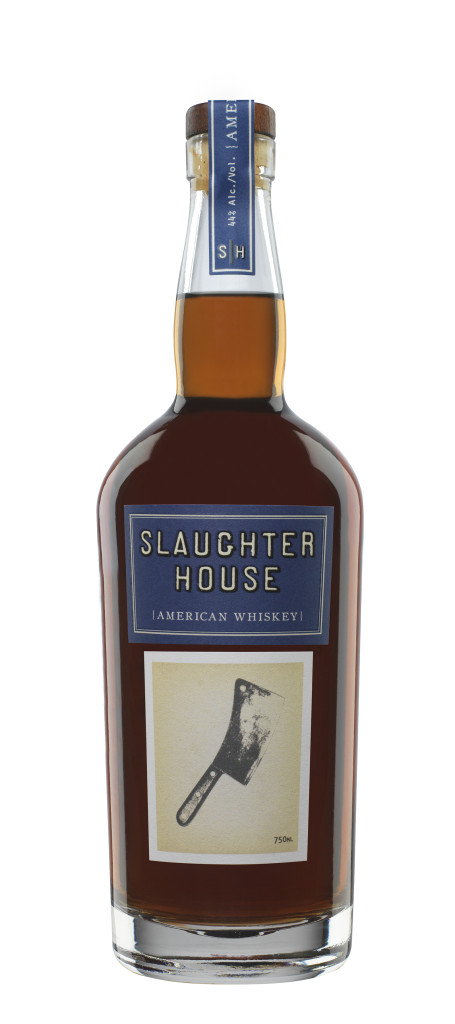
The other evening I picked up some Slaughter House American Whiskey for a choice tasting. For those that may not know Slaughter House is a creation from wine Rock Star Dave Phinney of Orion Swift Cellars fame. This is the man who created “The Prisoner” red blend in 2000 which catapulted his company into legendary status. He went on to form Orion Swift Cellars and sold “The Prisoner” to what is now known as The Prisoner Wine Company. For years Orin Swift has been making sourced wine blends that have garnered high scores and critical acclaim. His combination of high quality sourced grapes, meticulous vinification practices and creative labels have made him one of the more sought after and well respected California wine producers.
Recently Dave made his foray into Whiskey making in which Phinney continues his attention to quality and innovative label design with this recent release. Upon acquiring high level whiskey the spirit spends nine years in American oak and is then finished in Orion Swift Papillion wine barrels. Papillion is a high end Bordeaux blend created by Orion Swift. When bottled a touch of pure water from a natural spring in Phinney ‘s Alexander Valley property is added to enhance its aromatics. The combination of aging, finishing and filtration creates a harmonious whiskey. Here is my review:
Spirit details: Proof 88
Price: $40
Origin: USA
Description: The Slaughter House label dons a butchers meat cleaver with a white backdrop invoking a murderous intention with an old school slasher/movie feel. This seems appropriate for this whiskey as it cuts right through your senses.
Nose: Intense vanilla and baking spice that hits you immediately.
Palate: Honey, marmalade, and vanilla swath the forefront while spice and candied fruit coat the palate. A bit of heat touches the tongue with honey and vanilla rounding it out. An intensely focused spirit yielding just the right amount of spice and sweetness for an American Whiskey.
Finish: Vanilla, spice, butterscotch and toast produce a finish that lingers on.
Conclusion: This is everything you would expect from an American Whiskey. Dave Phinney manages to capture the spice, vanilla and toasty qualities from the American oak while giving the whiskey a weighty mouthfeel from its Bordeaux barrel finishing. While I didn’t feel like I was being hacked with a cleaver, Slaughter HouseWhiskey oozes with flavors that are a cut above the rest. A solid effort from this wine producer and worth a bottle purchase.
I’m sitting in a comfy chair inside Lehman Cigars, a cozy, family-owned shop and lounge on Bedford Park Boulevard in the North Bronx near the Botanic Garden, with Aging Room’s latest creation in my hand. Aging Room first made major cigar headlines in 2013; years of blending and experimentation earned their F55 cigar the No. 2 spot in Cigar Aficionado’s Top 25 Cigars of the Year. After a further two years of work, Aging Room is now following up on the F55 with a successor stogie: the F59. Building upon the F55’s reputable foundation, the F59 is designed to surpass its predecessor’s strengths and overcome its weaknesses. Will the F59 be a successful sequel? Let’s find out.
Form and Substance
Vitola: Churchill
Wrapper: Dominican Habano
Binder: Dominican Habano
Filler: Dominican Habano
Dimensions: 50 x 7
Country of Origin: Dominican Republic
Aesthetics, Construction and Feel
The F59 looks genuinely natural due in part to its minor imperfections. The wrapper is rugged, with veins galore; the cap is loosely wrapped (though that’s probably just the cold weather); and the box press is a bit round, with a few soft spots on the edges. However, the wrapper has a sultry velvety texture, and the cold odors are exquisite: the body boasts a light, but dense wood flavor, with nutmeg on the foot.
Smoke and Flavor
First Third: Right from the get-go, the draw is perfectly loose and fluid, allowing the strong and chewy nutmeg notes to flow seamlessly to the palate before being released into the air as rich, thick smoke clouds that boast a lush timber aroma. There is a salty undertone just beneath the nutmeg. The two major notes combine with the ’59’s thick texture to produce an ever-thicker aftertaste that sticks to the palate like glue.
Second Third: The draw begins to loosen a little too much; there’s much thin air and wind in every puff, making the flavor less prominent. Despite this, a spicy element makes its way into the texture, tickling the tongue slightly. Cinnamon also appears in the background, melding deliciously with the salt to form a solid background flavor profile. Around this time, the burn begins to canoe slightly, the ash begins to tilt to the side, and the draw begins to fade, staying loose, but needing constant puffing to keep it alive. A noticeably tilting ash is the surest sign of them all that it’s time to let it go, so I do. The ash goes remarkably cleanly and without a fuss.
Final Third: The final third sees the salt and cinnamon starting to give way in the background as the nutmeg begins to take over. By the time the first half of the final third is cleared, the salty cinnamon is good as gone. The nutmeg itself begins to flatten out for a moment, but soon regains its vitality and conquers the entire flavor profile. At this point the flavor begins to going for the palate directly. The aftertaste becomes noticeably chewier; the nutmeg moves in and coats itself over the palate entirely, making the taste much more direct and full. The burn never fully evens out, but the coating of the palate with nutmeg nevertheless constitutes a fine finish.
The Final Verdict
While not perfect in execution, the F59 was an intriguingly pleasant smoke overall. The flavor profile was slightly more simplistic than expected, but great nonetheless. All in all, the F59 not only lives up to the promise of its predecessor, it surpasses it. Job well done, Rafael! can we expect an F63 in the not-too-distant future?
Final Grade: A
Tips for a Perfect Smoke Experience
The F59 may be an Habano, but as a Churchill, it smokes more like a Maduro due to the higher wrapper to filler ratio and the extended length, so be prepared!
This would make a good pairing with a lighter scotch, such as a Macallan 15.
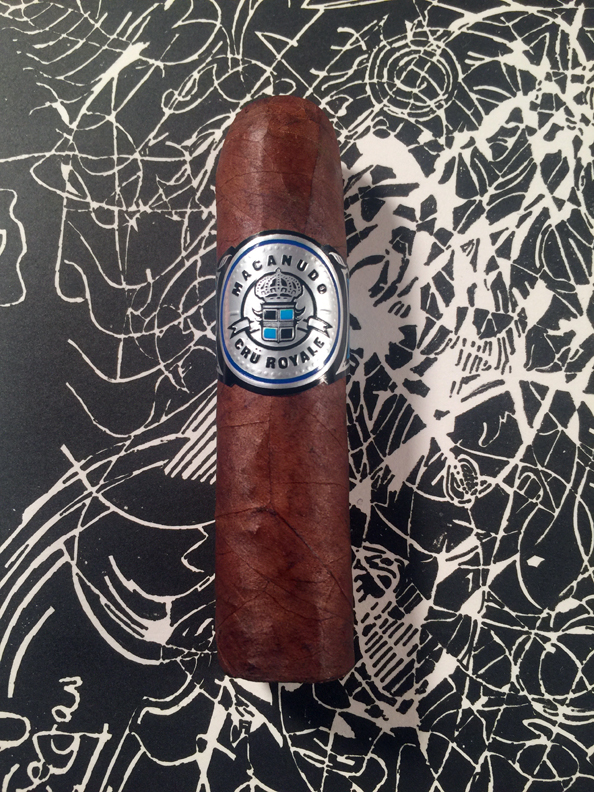
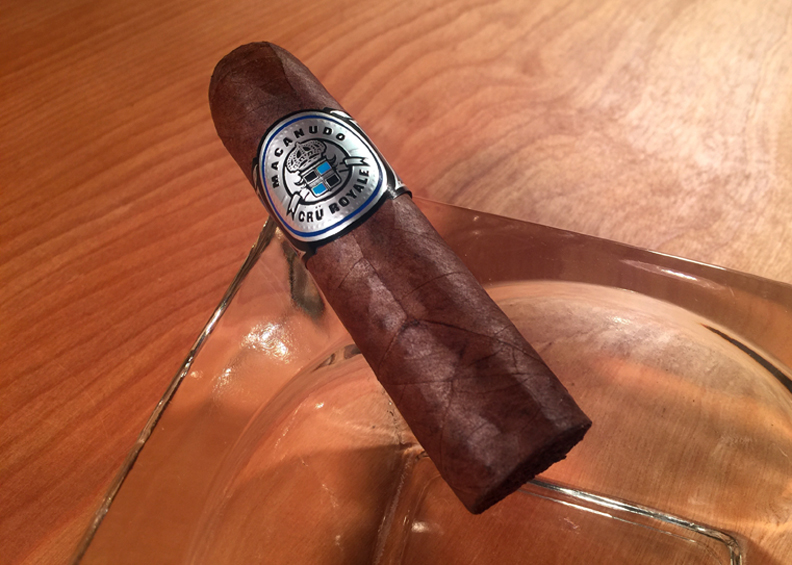
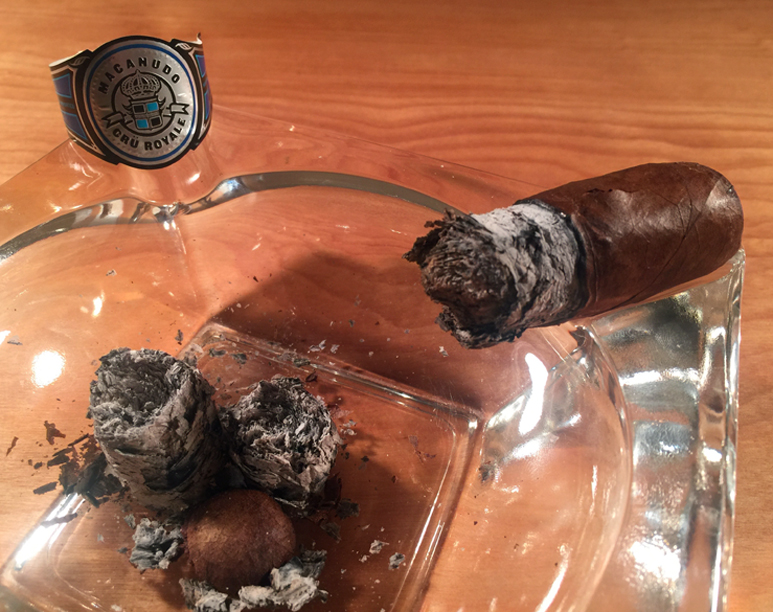
The Macanudo Cru Royale is rolled by General Cigars and Macanudo is one of their flagship brands. Rolled in the Dominican Republic, they are known for their consistent construction and smoking experience, aged wrappers and having a broad, widespread appeal to both novices and experienced smokers. For this review, 2 cigars were smoke and were generously provided by Famous Smoke based out of Pennsylvania.
Cigar: Macanudo Cru Royale
Blend Specifics:
Vitola: Poco Gordo 4”x60
Wrapper: Ecuadorian Habano
Binder: Dominican La Vega Especial
Filler: Nicaraguan, Dominican and Brazilian
Appearance and Construction: The Macanudo Cru Royale has a semi-dark chocolate wrapper. Minimal veins and tight invisible seams. Very smooth sating feel with a slight oily sheen. Dense, even packing and sports a nicely applied double cap.
Smoke and Flavor Characteristics:
Cold Aromas: The wrapper is bit of wood, faint farmyard, and a touch of spiciness. The foot presents chocolate, wood and leather. The cold draw has chocolate and wood with a touch of mineral grit, not unlike gravel.
First Third: The first few draws show a lot of leather, more of that mineral grit and a very easy, open draw. A dry wood also becomes present. The draw give off thick clouds of smoke, no spice is detectable at the moment. Though the leather hangs around in the nose and mouth for a good while. The aroma pouring off the foot is also of rich leather.
Burn line isn’t razor sharp but performance is just fine. The ash formation is a very pale gray, almost white, slightly flakey and absent of rings. There’s fair amount of cream that comes into play. I’m tapping the ash off at ¾ inch since it’s really flakey. The body is medium, the flavor is medium to full, and the strength is at medium.
Second Third: The second third picks right up where first left off, leather and wood with a decent does of cream. Performance is still excellent. A bit of chocolate comes in on the aroma. Removing the band takes little to no effort and is held together with self-adhesive glue. Body still at medium, the flavor is medium to full, and the strength is at a medium.
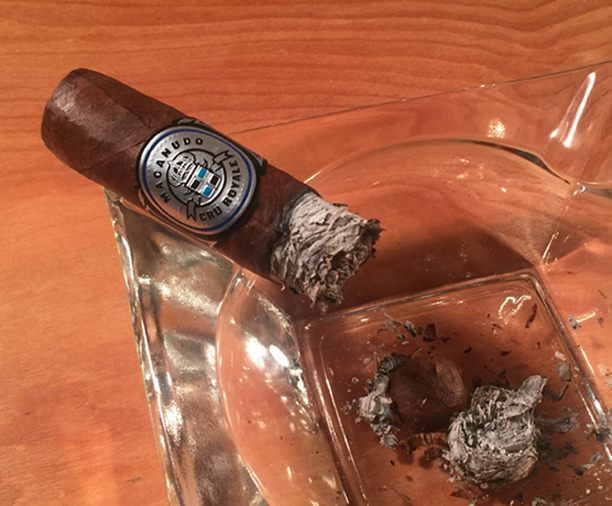
Final Third: The final third is holding true to form and still leads with the leather and wood combo. The aroma is still pleasantly woody, earthy, and leathery. Performance and burn are still doing well. Just toward the end, within the last inch or so, the heat started busting the wrapper in multiple areas, though the performance is still ok. Also, the wood ramped up has become the dominant characterizing note. This cigar finishes out at medium in body, medium to full in flavor and medium in strength.
Final Thoughts: The Macanudo Cru Royale features fine leaves, excellent and consistent construction and smoking experience. The profile is more on the drier and bitter side of the flavor spectrum with the leather providing a bit of savory respite. The aroma is calming and luxurious and the profile isn’t at all strong which makes it a good early morning / mid-afternoon smoke. For a small vitola cigar, it has a pretty long smoking time. The body and strength are a solid medium while the flavor is medium to full.
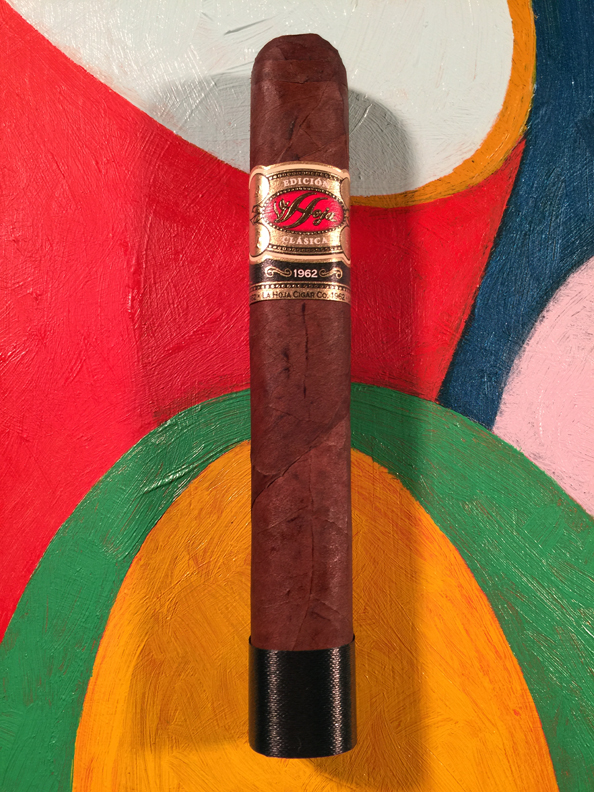
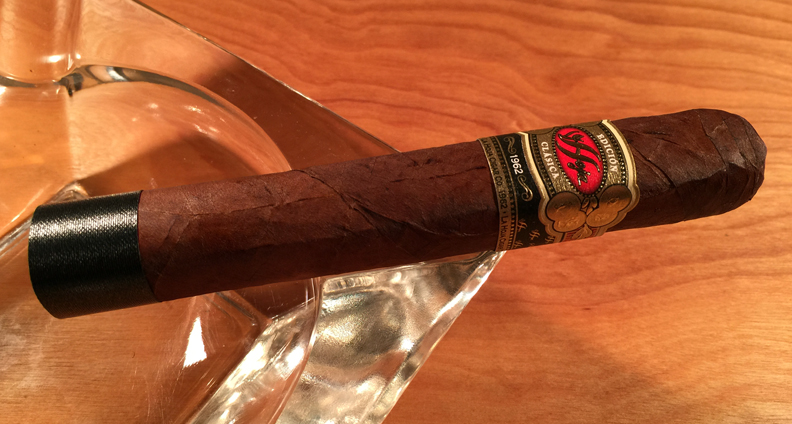
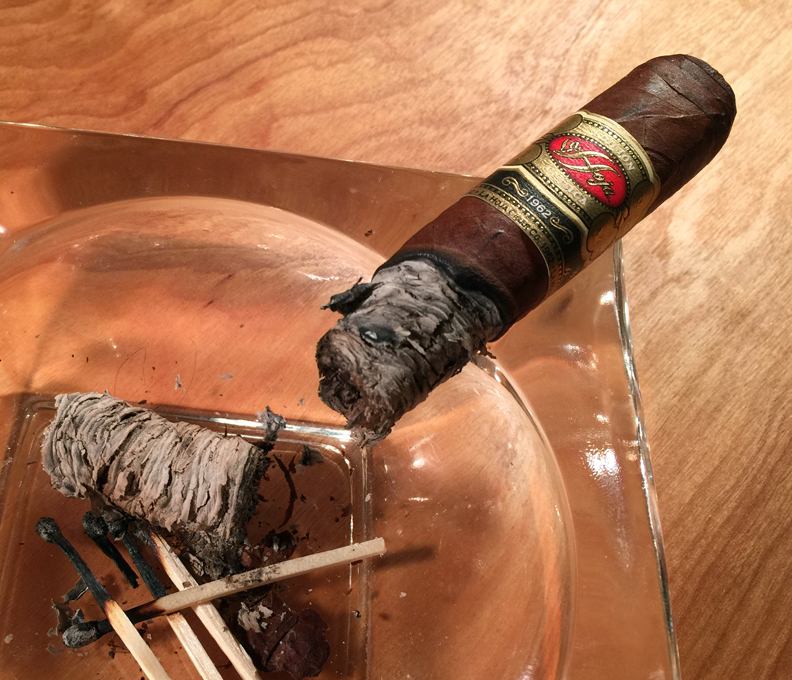
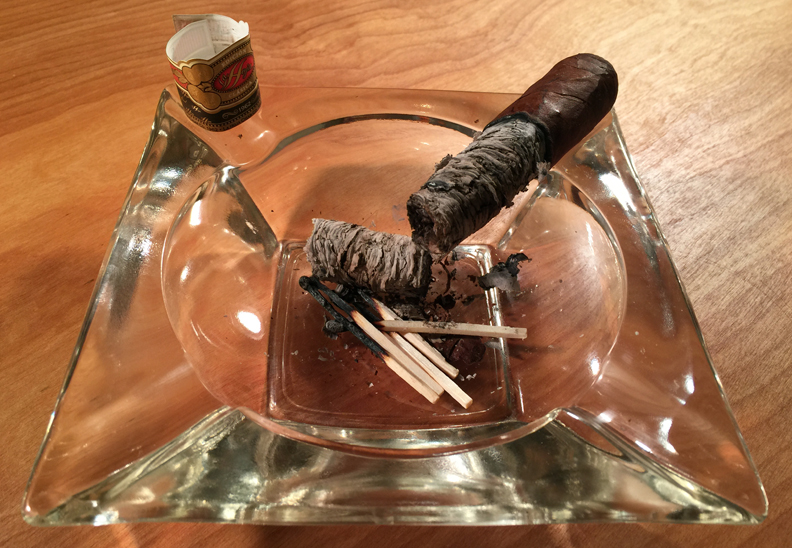
The La Hoja Edicion Clasica 1962 comes to us via Willie Flores and Carlos Gomez of La Hoja, who are also good friends to all of us over here at FTNYC. You can find these exceptional boutiques at most shops in the NYC area as well as our events where we have featured the brand and their various lines. The Clasica is rolled in the Santiago region of the Dominican Republic and is a recent release from the company, featuring new labeling to their previous offerings.
Cigar: La Hoja Edicion Clasica 1962
Vitola: Toro 5.5” x 56 soft box-pressed
Wrapper: Ecuadorian Corojo
Binder: Dominican
Filler: Dominican
Appearance and Construction
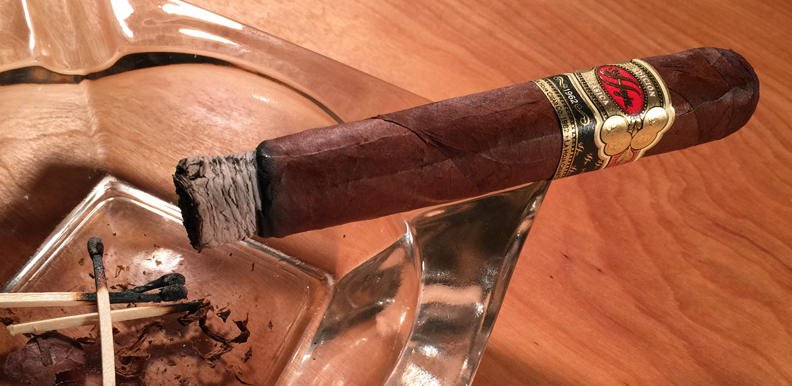
The Edicion Clasica has a dark chocolate wrapper with minimal smallish veins, a very slight oily sheen, and a very smooth dry satin texture. The seams are visible but the wrapper is noticeably wrapped well around the cigar and still shows good construction. A nicely applied double cap, and comes packaged with a foot band. The cigar also has an even sponginess throughout and the foot shows an even dense bunching.
Flavor & Smoke Characteristics
On the wrapper, there is cedar, a touch of earth and not much else. On the foot, there is cinnamon, a touch of white pepper, a hint of chocolate, and overall on the sweeter side. The cold draw is salt, cedar, a bit of earth and musk, which makes present the good amount of fermentation and aging this tobacco has gone through. Also to note, the wrapper tobacco leaves a salty taste on the lips from the head of the cigar. The draw is an even to slightly loose tension, which is great.
First Third: The first notes give way to a very soft white pepper, salt, a touch of cedar, and a bit of musk. A nice cream with a bit of a gritty earth on the finish rounds out the initial draws. From the start of the cigar the mouth-feel and retrohale of the smoke are exceptionally smooth. The aroma is characterized of cedar, dark chocolate, earth, and leather notes. Staring off with a close to razor shape burn, the ash is tight but fragile looking (flaky, but not) and is a pale gray with slightly darker, very thin ring lines. The smoke is medium to full in body, medium to full in strength, and medium to full in flavor. Progressing through the first third, the earth, cedar, musk, cream and leather take hold as the main notes, with minor notes of salt, dark chocolate and a slight soapy floral. The smoke is still very smooth, with a clean crisp finish in the mouth, while leather and salt last through on the finish in the nose. The smoke is overall very dry feeling, and cool with no spices to be found. Only a touch of white pepper comes through here and there. Toward the end of the first third, a touch of bitter cinnamon start to also last on the finish.
Second Third: Transitioning from the first to second third, a little spice comes up, but only last for a moment and primarily on the tongue. Notes are still characterized of earth, leather, musk, even though it has come down a bit, cedar, chocolate, salt, and a slight floral. The ash fell off on its own as one solid chunk at 1.5”. The cigar starts to lose its razor sharp burn and seems to do so when the wrapper leaf is overlapping another part of the wrapper leaf with concentration at the seam. Though, the cigar is still performing well and flavors aren’t being lost due to the burn. It may need a minor touch up here and there. The chocolate comes up a little, with now entering a slight espresso note to complement, while the salt has moved down a bit. The earth, leather and cream are still holding strong. The aroma is also still of leather and salt notes. The smoke is medium to full in body, medium to full in strength, and now moving up to full in flavor. The smoke stays fairly cool as the cigar progresses through the second third. This cigar also gives off nice creamy plumes of smoke.
Final Third: Starting into the final third, I did have to give the cigar a minor touch up. The flavors are still holding with the cedar and leather taking the fore, with the earth moving down just a little. The espresso has come up a bit with the chocolate; the salt is still moving down but sticking around. The band is a self-adhesive and comes off cleanly. The musk is making more of presence in the aroma and the profile is still holding at medium to full in body, medium to full in strength, and the flavor moving back down to medium to full. The cream is also lasting through the finish, while the smoke in the mouth is getting slightly grittier and the retrohale being very smooth. As the cigar gets down to the nub, the chocolate and espresso both begin to last on the finish, and the smoke stays fairly cool. The leather, earth, cream, musk, and cedar still hold their notes quite strongly to the end.
Final Thoughts
This cigar screams class, from its top-notch construction, to its choice selection of rare filler, binder and wrapper tobaccos, its complex earthy profile and extremely smooth smoke production. All these characteristics make up an exceptional cigar and a one-of-kind experience. Though, I did have to touch it up a couple times throughout the session, each time was only a minor case. The cigar, its construction and flavors held strong and never strayed away from its intentions of providing a fine experience. The complexity lasts through the duration of the smoke, with its major notes being leather, earth, musk, cedar, and cream and minor notes of salt (though, the salt is a major and minor note, depending on where in the session one is experiencing this note), dark chocolate, and very slight hints of espresso, floral notes, and white pepper.
Rocky Patel has always been a favorite of mine: so much so that there was a time when I would smoke his Vintage 1990 cigars almost exclusively. But, as any aficionado will tell you, not all cigars are created equal, and even different types of the same cigar can be quite different from one another. As such, I’ll be revisiting the Decade, one of Rocky’s most prolific creations. Our founder Matthias Clock reviewed the Decade Toro almost three years ago. Today, I’ll be tackling the Robusto vitola. Now I know what you’re all thinking: why revisit this particular cigar? Because this is a cigar worth examining more closely: it boasts a whoppin’ 95 rating in Cigar Aficionado magazine, and it’s also a personal favorite of yours truly. However, I’ve also experienced inconsistencies with this blend in the past, which means the case isn’t closed just yet…
Blend Specifics
Vitola: Robusto
Wrapper: Ecuadorian Sumatra
Binder: Honduran
Filler: Nicaraguan
Dimensions: 5” x 50’
Country of Origin: Honduras
Aesthetics, Construction and Feel
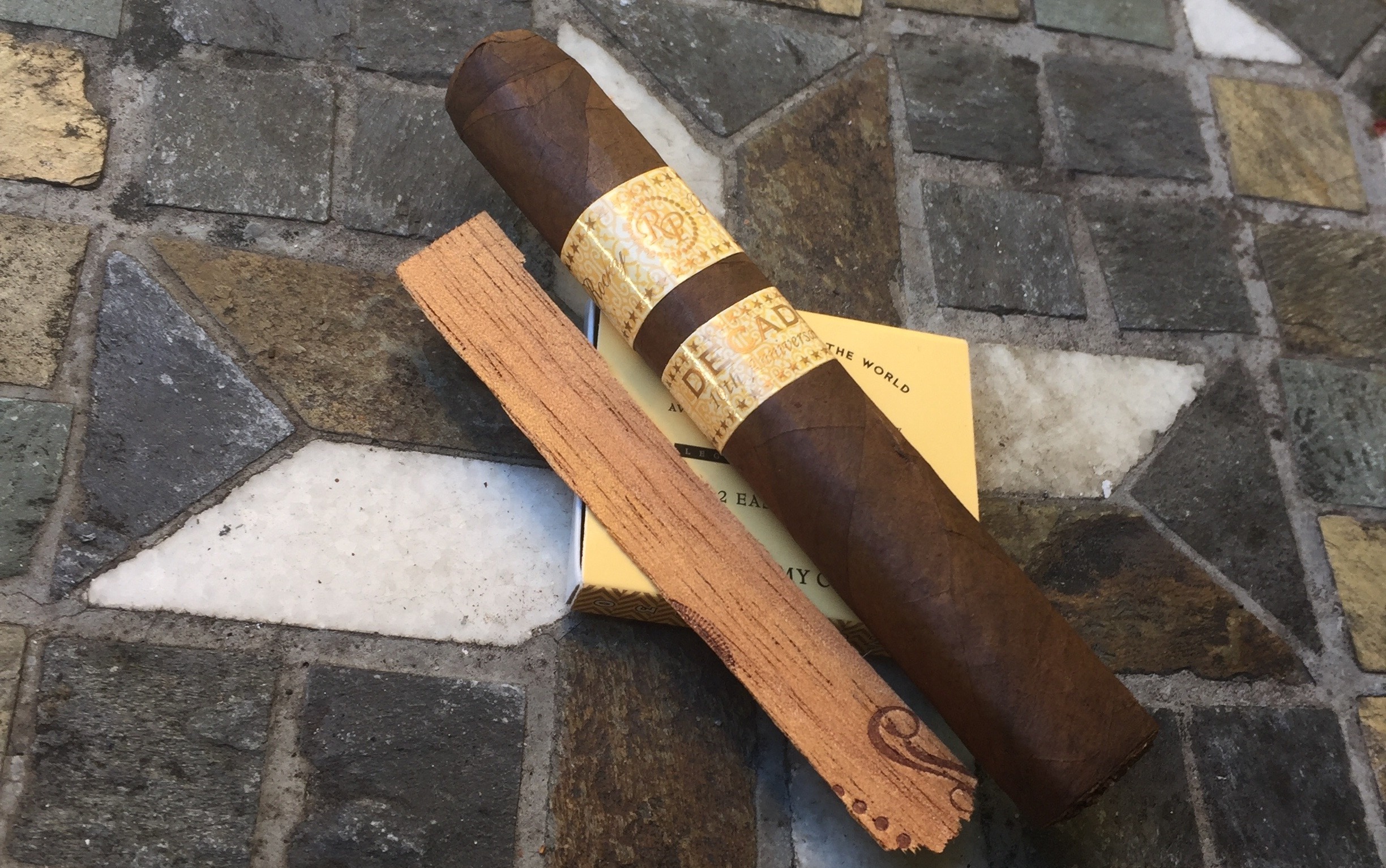
The Decade Robusto is quite a sight to behold. Its dark, rough Ecuadorian Sumatra wrapper contrasts perfectly with the regal beige-gold label. I haven’t even held it in my hand, and I’m already impatient to smoke it! While the wrapper looks rough and has no peach fuzz, it’s still remarkably smooth. The meticulously box-pressed body is firm without being rigid and boasts no noticeable soft spots: two very good signs that any serious smoker should always seek in a cigar. The cold odors consists mainly of oak and leather with a hint of spice so strong that it burns the nostril if you’re not careful. The foot boasts a more chocolate-centric aroma, again with a sneakily strong hint of spice just below the surface.
Smoke and Flavor
First Third: A great journey begins on the heels of a finely balanced draw. The first few puffs bring forth a harsh and bitter dark wood that leave the palate in the form of excellently thick and lush smoke clouds. A wholesome helping of bread is prominent in foreground, along with the wood. As the white-gray ash continues to hold its form near-perfectly and the burn remains consistently even, the spice present in the cold odors comes into the mix and melds with the wood, maturing it. The flavor profile’s middle ground and background have gradually crystalized in the mean time, the middle ground sporting a constant, delicious dark chocolate essence, while a tart element of sugar takes the background. The bread recedes some from the foreground as the first third nears its end, at which point the Decade develops a rich chocolate and wood aftertaste that smoothly wraps itself around the palate like silk on the skin.
Second Third: The second third is a somewhat purgatorial stage for the Decade Robusto. The near-perfect draw begins to tighten. The ash falls off suddenly and unexpectedly. What’s more, the burn begins canoeing, though fortunately it never fully does, limping along as it fluctuates. Meanwhile, the tart sugar note in the background intensifies. The wood flavor in the foreground again matures and becomes more toasty. However, it also becomes more bitter, concentrating and taking over the foreground, forcing the bread out. The ever-present spice in the middle ground intensifies as well, to the point where it touches the tongue. The burn finally begins evening out, signaling the end of the purgatorial second third.
Final Third: And now that we’ve cleared Purgatorio, it’s time to experience Paradiso. The bitterness in the wood at the forefront recedes, allowing for the wood to be enjoyed more easily before it too eventually recedes to make way for the dark chocolate, which soon replaces the bitter essences entirely. Advancing to the front from the middle ground, the dark chocolate expands and shares the foreground with the rich, toasty wood. This particular transition coincides with an emergent leathery texture on the draw, which loosens back up, further enriching the cigar. While the burn is still a bit uneven, the spice at the nub is greatly diminished. The Decade Robusto finishes out strong on the heels of a sweet, dark chocolate and wood flavor profile with a rich, leathery draw.
The Final Verdict
I wanted a solid performance, and that’s exactly what I got! Experience tells me the best way to have a Decade is to have it box-pressed, hence my choice of this particular vitola. Not only does it deliver a rock-solid smoke with an excellent flavor profile and draw, it also does so in an efficient amount of time. In conclusion, I think I’ve found my new favorite vitola for one of my top five favorite cigars!
Final Grade: A
Total Smoking Time: 00:47:16
Tips for a Perfect Smoke Experience
This little one may only be 5×50, but it packs a punch comparable to a 6×60 maduro, so don’t underestimate the Decade Robusto! While black coffee is well and good, make sure you have dark chocolate on hand: it’s proven to help protect against tobacco buzz, and it brings a sweet balance to the experience to the smoke with the cigar itself can’t quite bring on its own.